
Lapis Lazuli
Everything you need to know about lapis lazuli gemstones by expert gemmologist, Marie Chalmers.
Lapis lazuli has been mined in the same Afghan mountains for over 6,000 years, and the blue pigment made from it was once worth more than gold.
Prized by pharaohs, painters and jewellery makers alike, even its name reflects its famous colour, coming from words meaning “stone of azure”.
What is Lapis Lazuli?
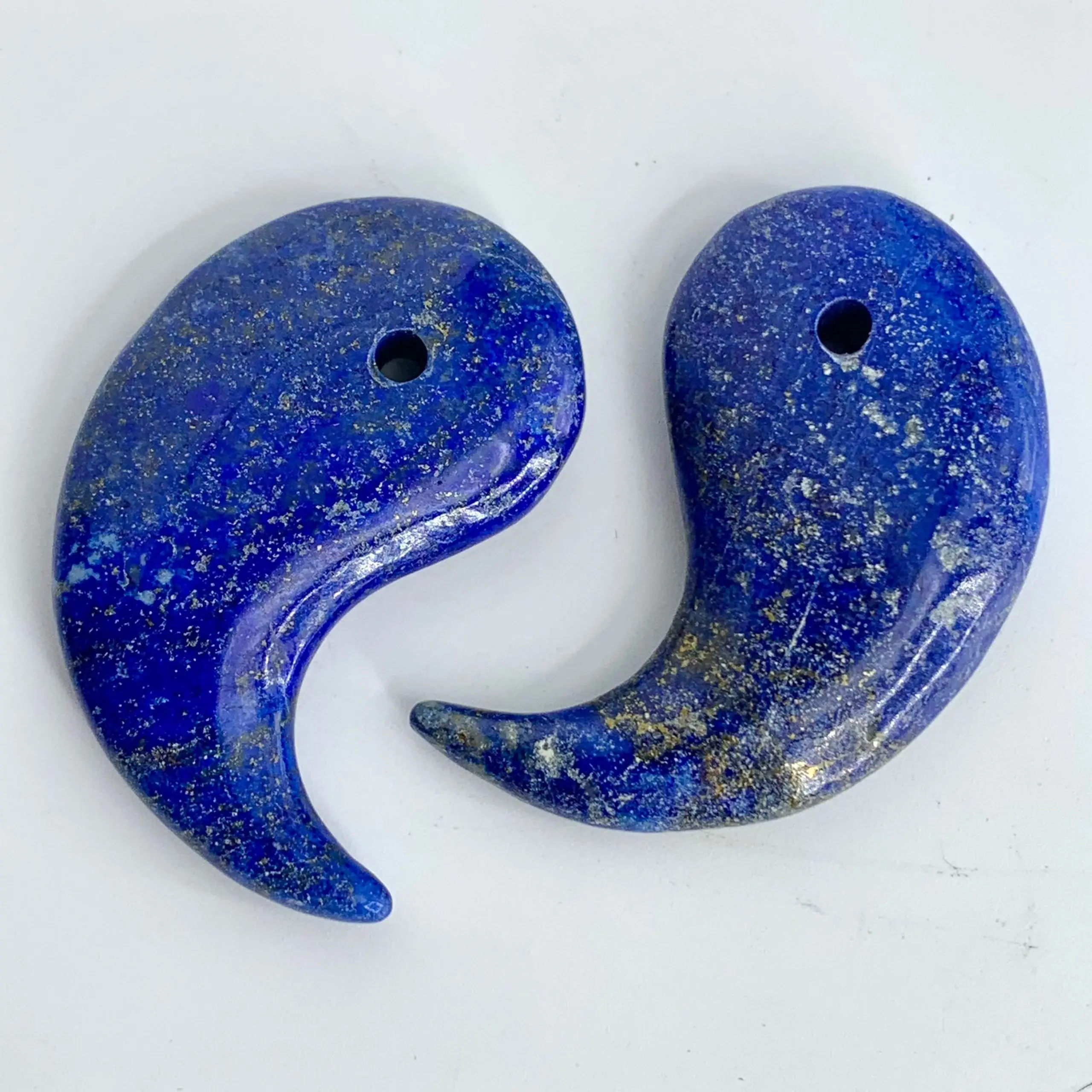
Lapis lazuli is a rock rather than a single mineral, made mostly of blue lazurite with other minerals mixed through it. Its name comes from the Latin lapis, meaning stone, and lazulum, from the Persian word for the stone and its colour. The same root gives us the word “azure”.
The finest lapis comes from the Sar-e-Sang mines in the Badakhshan region of Afghanistan, which are among the oldest working mines in the world. It is also found in Chile, where the material tends to be paler with more white, and in Russia near Lake Baikal, along with smaller deposits in Pakistan and the USA.
Lapis lazuli is around 5 to 6 on the Mohs Scale of Hardness, depending on its mineral make-up. That makes it softer than many popular gemstones, so it is best suited to pendants, earrings and beads rather than rings that take daily knocks.
If you’re trying to work out whether a blue stone is lapis or sodalite, read Marie’s guide: How to tell the difference between Sodalite and Lapis Lazuli.
Rarity & Quality
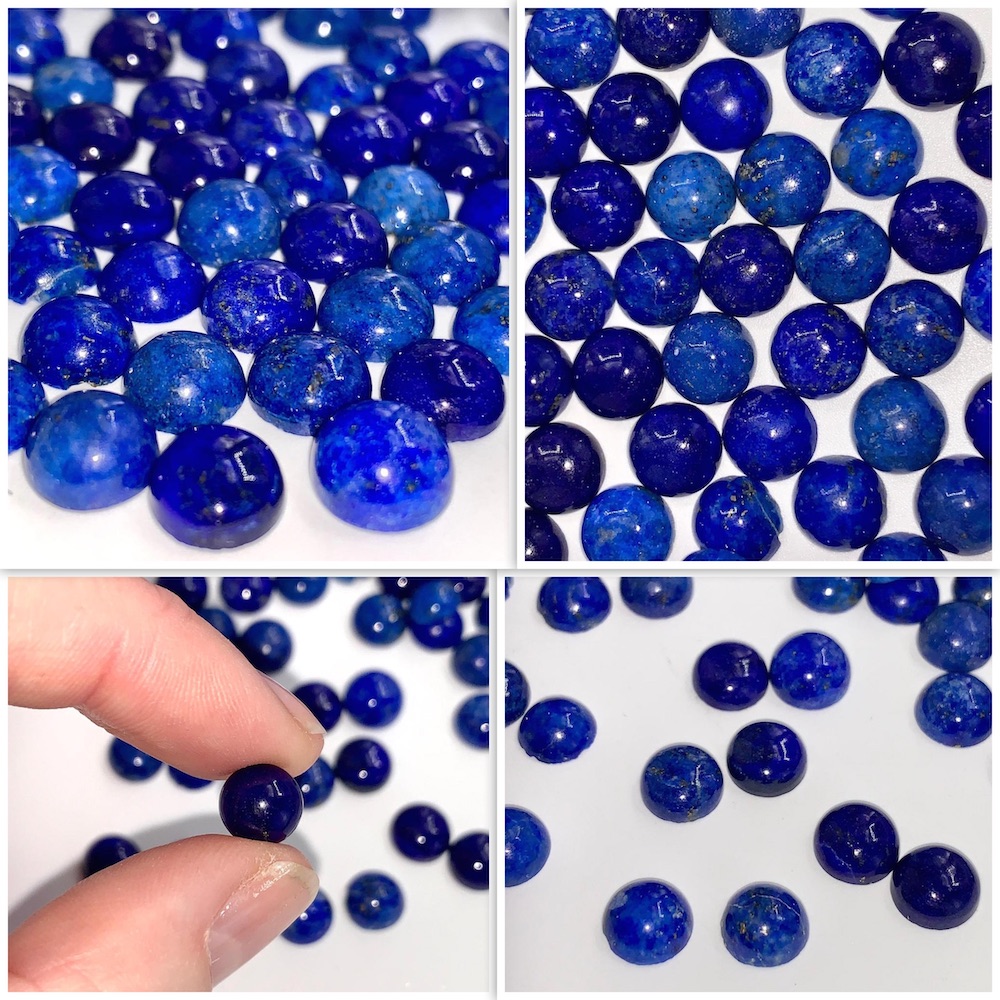
Not all lapis is equal. The most valuable material has an intense, even, slightly violet blue with little or no white calcite. Fine, evenly scattered flecks of golden pyrite can add to its appeal, but the very finest lapis may show little or none. As the blue gets paler or the white patches get bigger, the grade drops. Pale, mottled lapis is sometimes sold as “denim lapis”.
Because top-grade lapis is scarce, some lower-grade material is dyed to deepen its colour, or waxed and oiled to improve its polish. You will also see imitations such as dyed howlite, dyed jasper (sold under the trade name “Swiss lapis”) and reconstituted lapis, which is made from crushed lapis bonded with resin. A reputable seller will always tell you what you’re buying.
Lapis Lazuli Through History
Lapis was one of the first gemstones ever traded. It was carved into jewellery in the royal tombs of Ur in Mesopotamia, and the ancient Egyptians inlaid it in Tutankhamun’s golden death mask.
In medieval and Renaissance Europe, lapis was ground into ultramarine, the most expensive pigment a painter could buy. Because it cost more than gold, it was often saved for the robes of the Virgin Mary. Vermeer used it for the blue headscarf in Girl with a Pearl Earring. The name ultramarine means “beyond the sea”, after the long journey the pigment made from Afghanistan to European artists. A synthetic version wasn’t invented until 1826.
Why Jewellery Makers Love Lapis Lazuli
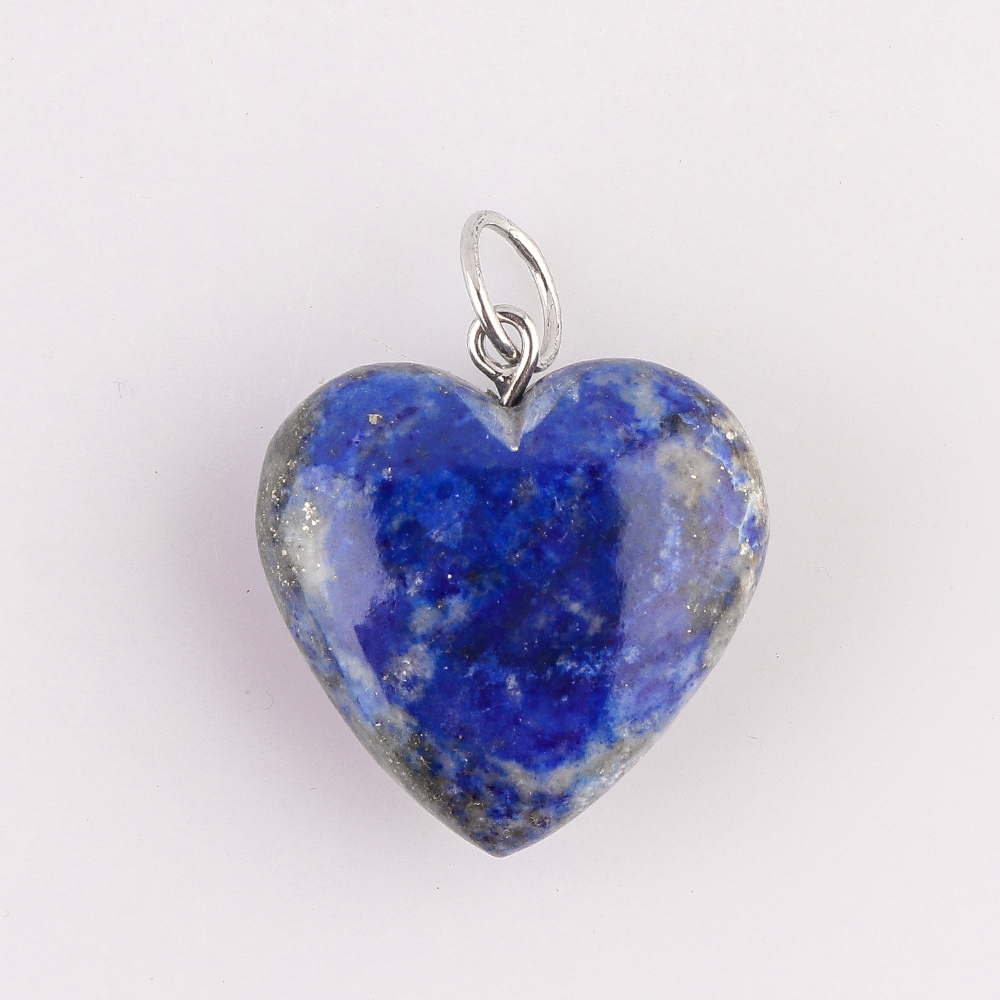
Lapis gives you a strong, saturated blue that stands out in any design. Its gold flecks make it a natural match for gold and brass, while silver gives it a cooler, crisper look. Because it is usually opaque and polished smooth, it shows off beautifully as beads and cabochons.
Popular uses include:
- Cabochon pendants
- Beaded bracelets and necklaces
- Earrings
- Bezel-set statement pieces
- Wire-wrapped designs
Popular Lapis Lazuli Products
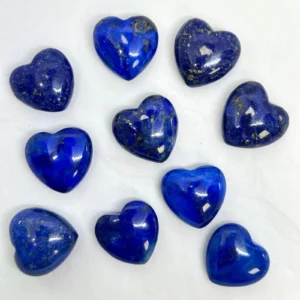
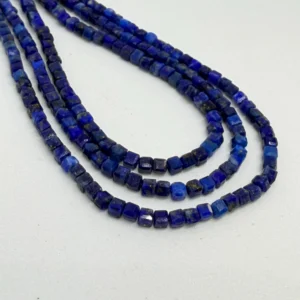
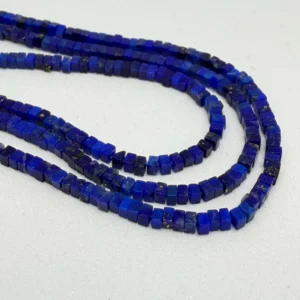
Is lapis lazuli always natural?
Lapis itself is a natural rock, but some stones on the market have been dyed, waxed or oiled to improve their colour and shine. There are also imitations made from dyed howlite or jasper, and reconstituted lapis made from crushed stone and resin.
Why is lapis lazuli blue?
The blue comes from lazurite, the main mineral in lapis. Sulphur held within lazurite’s crystal structure is what gives it that rich, deep colour.
What makes good quality lapis lazuli?
Look for an even, intense blue with little or no white calcite. Fine flecks of gold pyrite are often loved for their sparkle, though the highest grades show little or none. Plenty of buyers choose lapis with more white or more gold for its character.
Is lapis lazuli a birthstone?
Lapis lazuli appears as an alternative birthstone for September or December on some traditional lists, but it isn’t one of the modern birthstones for either month. Sapphire is September’s modern birthstone, and December’s include turquoise and tanzanite.
Is lapis lazuli durable enough for everyday jewellery?
At around 5 to 6 on the Mohs scale, lapis is softer than quartz and can scratch or wear with daily use. It is best in pendants, earrings and necklaces. If you’d like it in a ring, choose a protective bezel setting.
How do I care for lapis lazuli?
Wipe lapis with a soft, damp cloth and dry it straight away. Avoid ultrasonic and steam cleaners, perfume, hairspray and household chemicals, which can dull the surface or strip any wax. Store it away from harder gemstones to prevent scratching. To keep your Gems clean we recommend using the Chalmers Gems Gemstone Cleaning & Polishing Cloth.
How do I care for lapis lazuli?
Wipe lapis with a soft, damp cloth and dry it straight away. Avoid ultrasonic and steam cleaners, perfume, hairspray and household chemicals, which can dull the surface or strip any wax. Store it away from harder gemstones to prevent scratching. To keep your Gems clean we recommend using the Chalmers Gems Gemstone Cleaning & Polishing Cloth.
Can lapis lazuli go in water?
Clean lapis briefly with a soft, damp cloth, but don’t leave it soaking. Some lapis contains porous minerals or has been dyed, oiled or waxed, and long contact with water or cleaning products can affect it.
Is lapis lazuli the same as sodalite?
No, although they are easily mixed up. Marie explains the differences in How to tell the difference between Sodalite and Lapis Lazuli.
How can I tell if lapis lazuli is real?
Dyed imitations and reconstituted stones can look very convincing. A qualified gemmologist can confirm what you have. For checks you can do yourself, see How to Tell if a Gemstone is Real: 7 Checks.
Where does lapis lazuli come from?
The most famous source is the Sar-e-Sang mines in Afghanistan, which have been worked for thousands of years. Lapis is also mined in Chile, Russia and Pakistan, and each source has its own character. Afghan material is known for its deep blue, while Chilean lapis usually shows more white calcite.
Why buy lapis lazuli from Chalmers Gems?
Every piece of lapis at Chalmers Gems is selected by Marie Chalmers FGA DGA, a qualified gemmologist with over two decades in the jewellery industry.