
Moonstone
Everything you need to know about moonstone gemstones by expert gemmologist, Marie Chalmers.
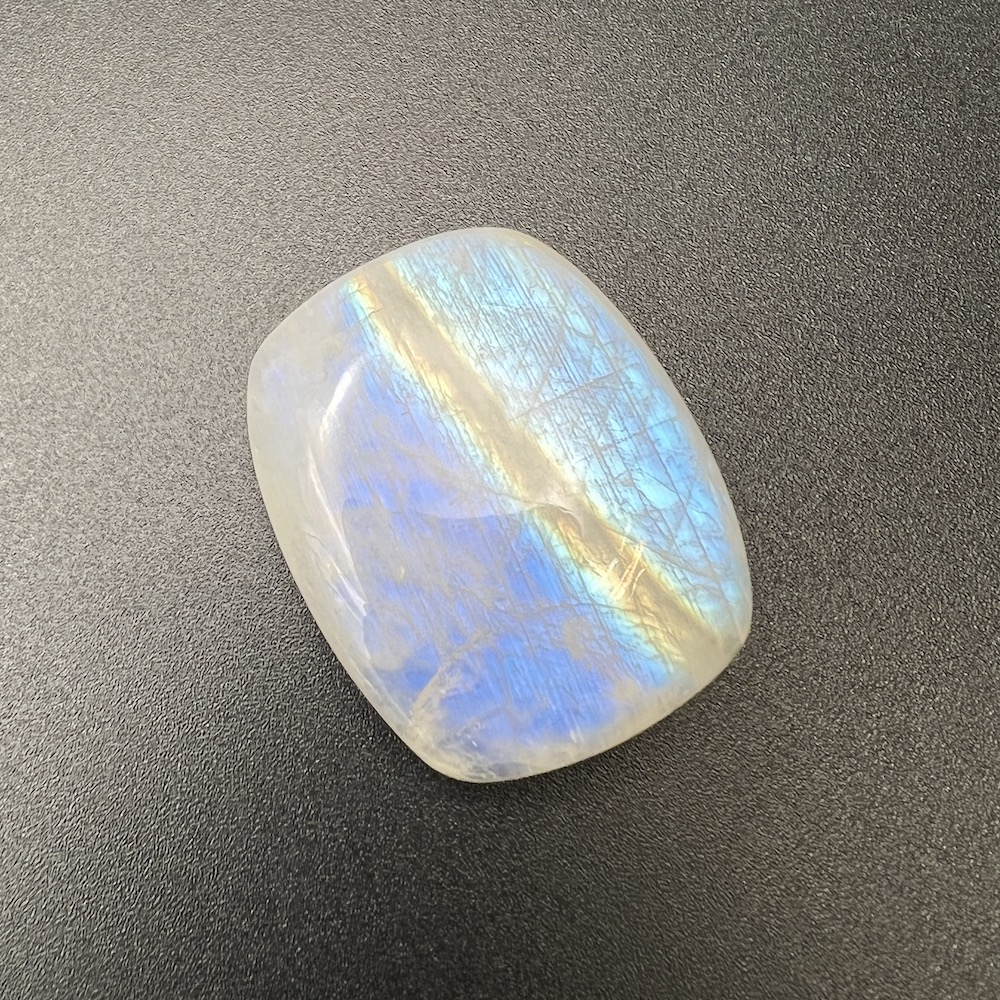
Moonstone gets its name from the way it looks. Turn it in the light and a soft glow drifts across the surface, like moonlight caught in stone.
It comes in a wider range of colours than some people expect, from cool white to warm peach, each with its own version of that signature glow.
What is Moonstone?
Moonstone is a variety of feldspar (potassium aluminium silicate, KAlSi₃O₈), crystallising in a monoclinic system with a tabular habit. It's one of the most common mineral groups in the Earth's crust. Its sisters include Labradorite and Sunstone, other feldspars famous for their own light-based optical effects.
Moonstone occurs in a wide range of body colours including pink, orange, colourless, yellow, bluish, green, brown and grey. The most valuable moonstone displays a blue sheen across a white body colour; other prized varieties include soft peach, billowy white, and moonlight grey tones. It's found across several sources worldwide, including Sri Lanka, India, Madagascar, Myanmar, Tanzania and Brazil.
Moonstone has a hardness of 6 on the Mohs scale, which makes it fairly resistant to everyday wear and scratching. However, it has two perfect directions of cleavage, meaning it can chip or break if knocked. It's best suited to jewellery that's worn more gently or protected from impact (pendants and earrings in particular) rather than pieces like rings or bracelets that take regular knocks.
Moonstone's signature glow is caused by light diffracting between different layers of orthoclase and albite feldspar within the stone. This effect is called adularescence, named after Mt Adular in Switzerland, one of the earliest known sources of the gem.
If you are born in June, Moonstone is your Birthstone (alongside Pearl and Alexandrite).
Take Moonstone in your hand and turn it in your fingers. Watch how the tiny fibres inside interact with the light and act as scattering centres, producing that ethereal, beneath-the-surface glow. This is why Moonstone makes some of the most beautiful pieces of jewellery.
Rarity & Quality
Rainbow Moonstone is one of the most highly prized varieties we sell. Its white body colour and full rainbow adularescence make it a customer favourite.
Quality varies significantly by origin: most of our stock comes from Madagascar and India, but the Sri Lankan material Marie sourced directly (see below) stands out for its exceptional clarity while still holding that signature bright blue sheen.
Moonstone Through History
A stone known since ancient times, moonstone was believed by both the Romans and Indians to be a sacred stone linked to the lunar phases. It saw a major revival in the Art Nouveau and Arts and Crafts eras, prized for its natural association with the moon and its ethereal glow. Jewellers including René Lalique and Louis Comfort Tiffany used it extensively, often set in silver, creating pieces that remain highly recognisable from that period today.
Why Jewellery Makers Love Moonstone
Moonstone's dreamy, ever-shifting glow makes it a favourite for designers who want a piece with real movement and depth. Its pale, versatile tones pair beautifully with silver, gold and rose gold.
Popular uses include:
- Cabochon jewellery
- Statement rings (in protective settings)
- Pendants and necklaces
- Beaded bracelets
- Wire-wrapped designs
Popular Moonstone Products
-

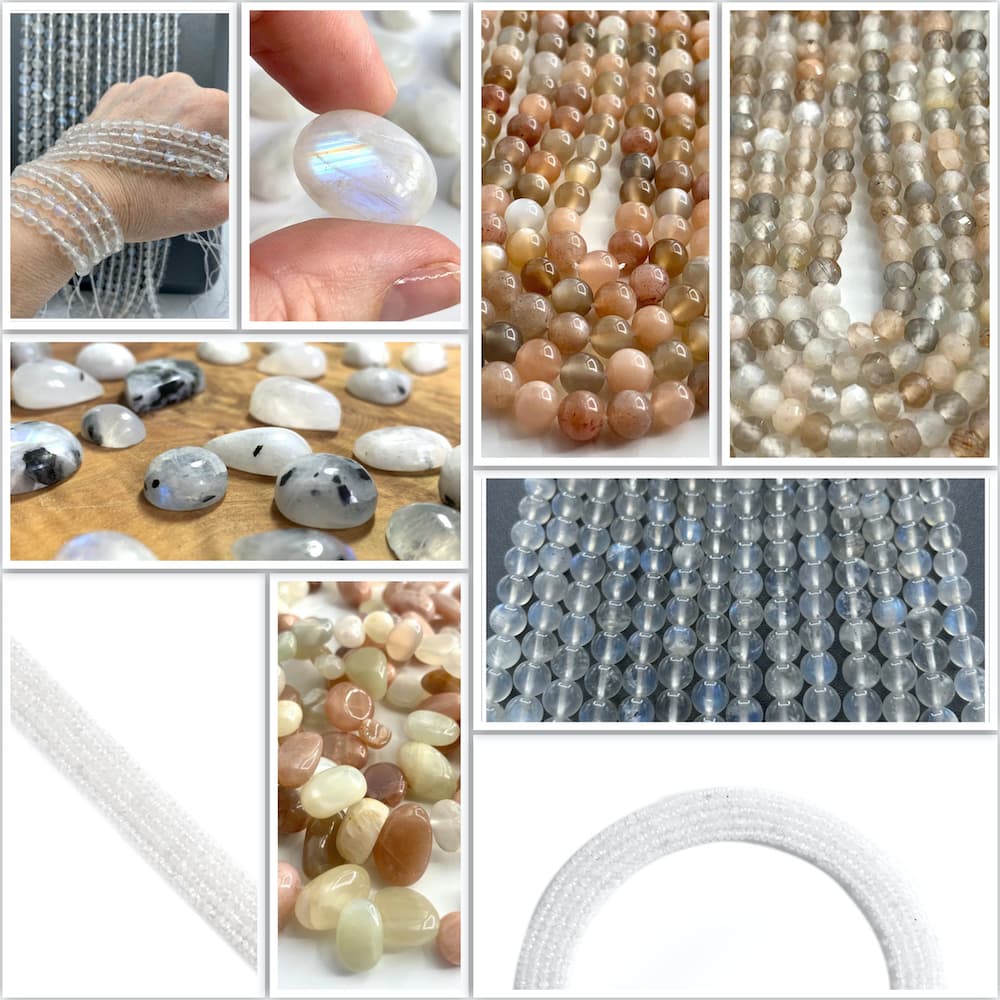
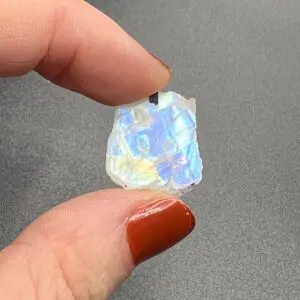
Peach Moonstone Beads 6-7mm – Nugget Gemstone (38cm) Strand
£9.00 -
Rainbow Moonstone Slices Approx 15 – 25mm 7 Piece Pack
£22.50 -
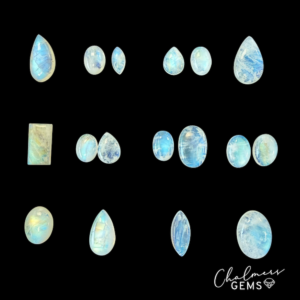
Rainbow Moonstone Cabochons – Select Your Own
£19.50 -
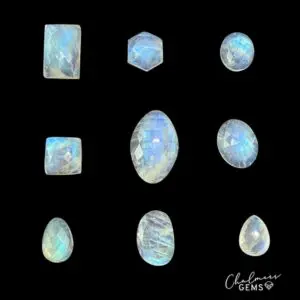
Rainbow Moonstone Rose Cut Cabochons – Select Your Own
From: £5.00 -
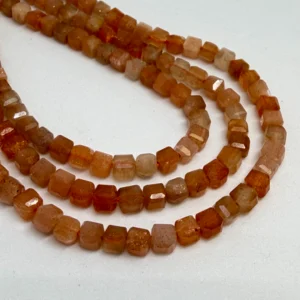
Peach MoonStone Beads 3x3mm – Faceted Cube Gemstone (38cm) Strand
£16.50 -
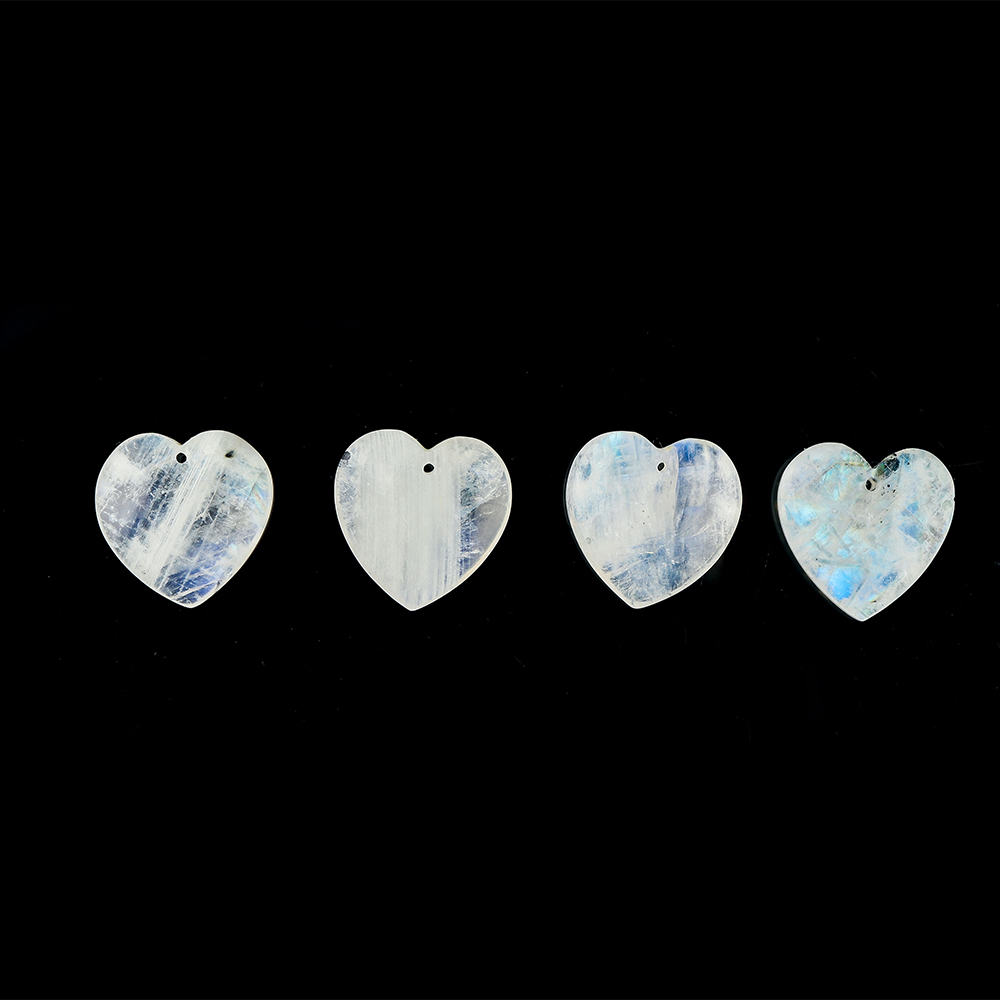
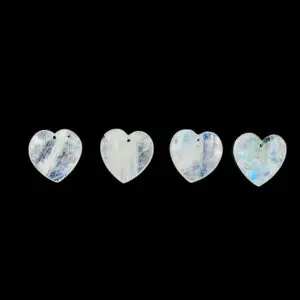
Rainbow Moonstone Top Drilled Heart 1pc Approx 2cm with 0.8mm Drill Hole
£50.00
Mining Moonstone in Sri Lanka
Sri Lanka is on every gemmologist's wish list. As well as producing some of the world's best moonstone, it's also a source of sapphires, rubies, garnets, chrysoberyl and alexandrite.
Marie visited a tourist mine there and found it fascinating: a pit with a 12-metre shaft, with branches dug off it to follow the seams. Each pit is worked for around 3–4 years before a new one is dug. While most of the moonstone Chalmers Gems sells comes from Madagascar or India, the Sri Lankan material Marie saw on this trip had noticeably higher clarity while keeping that bright blue sheen. White and golden sheen varieties were also being mined at the site, and were just as beautiful.
The trip didn't stop at the mine. Marie also visited the on-site cutting and polishing operation, where cabochons are shaped for tourists to watch. One detail she found particularly interesting: the polishing wheel is made from coral tree wood!
@chalmersgems 💎Mining Moonstone in Sri Lanka 🇱🇰 Sri Lanka is on every Gemmologists wish list because it produces not only some of the worlds most beautiful Moonstone but also Sapphires, Rubies, Garnets, Chrysoberyl and Alexandrite 😍…and that’s just a few 💎 It was absolutely fascinating (tourist) mine! A pit with a 12 meter shaft, they then build branches off the shaft and mine from there. They mine each pit for around 3-4years and then dig another one. Sri Lanka produces some of the world’s best moonstone. Mostly of the material we sell is from Madagascar or India, the Sri Lankan Moonstone we were looking at has a much higher clarity but keeping the bright blue sheen. They were also producing a white sheen and a golden sheen, both of these were also beautiful. Ask questions in the comments. Follow us for more 💎 We have footage of cutting and the jewellery factory if you’d like to see that just drop a note in the comments. #moonstone #srilankamine #srilankamoonstone #mining #gemstoenmining #gemmology #gems #gemstones #workinginjewellery #crystals #busmansholiday
♬ original sound - Chalmers Gems
Why is Sri Lankan moonstone considered special?
Sri Lanka is one of the world's top sources for moonstone. Marie visited a mine there herself and found the material had noticeably higher clarity than the Madagascar and India stock Chalmers Gems more commonly sells, while still keeping that signature bright blue sheen. White and golden sheen varieties were also being mined at the same site.
What's the difference between white, rainbow and peach moonstone?
All three show the same adularescence effect, but differ in body colour and tone. White Moonstone has a classic pale, silvery-white base. Rainbow Moonstone also has a white body colour but displays a full spread of colour across its sheen, making it one of our most popular and highly prized varieties. Peach Moonstone has a warmer, peachy undertone. The variation comes down to trace minerals and origin.
How can I tell if moonstone is real?
Genuine moonstone often contains natural inclusions known as "centipede inclusions" (tiny stress cracks forming an angular, centipede-like pattern, especially common in Sri Lankan material). A qualified gemmologist can identify these and other characteristics that distinguish natural moonstone from glass or synthetic imitations.
Is moonstone durable enough for everyday jewellery?
Moonstone's hardness (6 on the Mohs scale) makes it fairly resistant to everyday scratching. The real thing to watch for is its two perfect directions of cleavage, which means it can chip or break if knocked. It's best suited to pendants and earrings, or jewellery that's worn more gently, rather than rings or bracelets that take regular knocks.
How do I care for moonstone?
Clean moonstone using warm water, mild soap and a soft cloth, and dry it thoroughly afterwards. Avoid harsh chemicals and prolonged soaking, and store it separately from harder gemstones to prevent scratching. To keep your Gems clean we recommend using the Chalmers Gems Gemstone Cleaning & Polishing Cloth.
How do I care for moonstone?
Clean moonstone using warm water, mild soap and a soft cloth, and dry it thoroughly afterwards. Avoid harsh chemicals and prolonged soaking, and store it separately from harder gemstones to prevent scratching. To keep your Gems clean we recommend using the Chalmers Gems Gemstone Cleaning & Polishing Cloth.
Is moonstone a birthstone?
Yes. Moonstone is the traditional birthstone for June, shared with Pearl and Alexandrite.
Why does moonstone have that glow?
The effect is called adularescence (a soft, billowing sheen caused by light scattering between ultra-thin layers of feldspar within the stone). The name comes from Mt Adular in Switzerland, one of the earliest known sources of the gem.
How does Chalmers Gems source its moonstone?
Chalmers Gems travels straight to source rather than buying through anonymous wholesale chains. This means visiting mines, cutting factories and manufacturers directly to handpick each gemstone. Marie's Sri Lanka trip (above) is a real example of that process in action, not just a marketing claim.
Why buy moonstone from Chalmers Gems?
Every moonstone at Chalmers Gems is personally selected by Marie Chalmers FGA DGA, a qualified gemmologist with over two decades in the jewellery industry who visits sourcing locations herself. That gives you a level of traceability and confidence most sellers can't offer.