Should you choose a freeform or calibrated cabochon for your jewellery design?
The simple answer is: choose a freeform cabochon if you want to design around an individual gemstone, and choose a calibrated cabochon if you need the gemstone to fit a predetermined setting or want to reproduce the same jewellery design repeatedly.
Neither is inherently better. They simply suit different ways of designing and making jewellery.
As a gemmologist and gemstone buyer, I work with both freeform and calibrated cabochons. One of the most important things I've learned is that it's worth deciding which route you're taking before you finalise your jewellery design.
Get that decision wrong and you can create unnecessary problems – and expense – later.
Here's how to decide.
What are freeform cabochons?
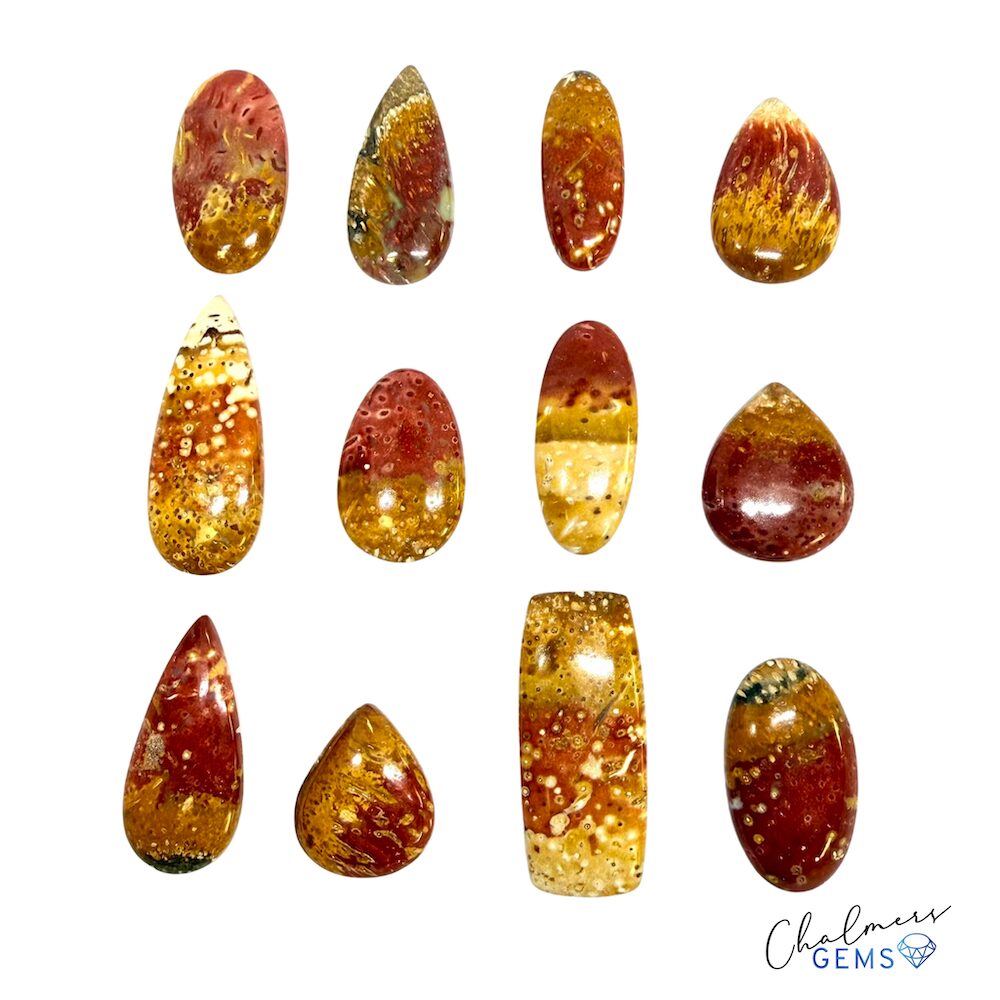
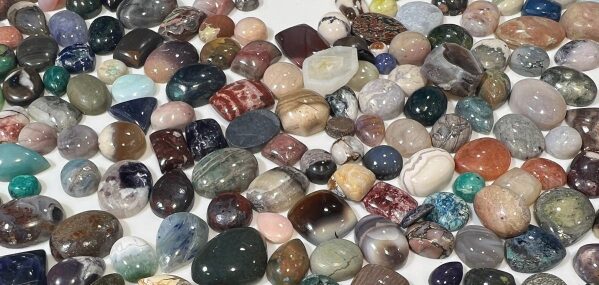
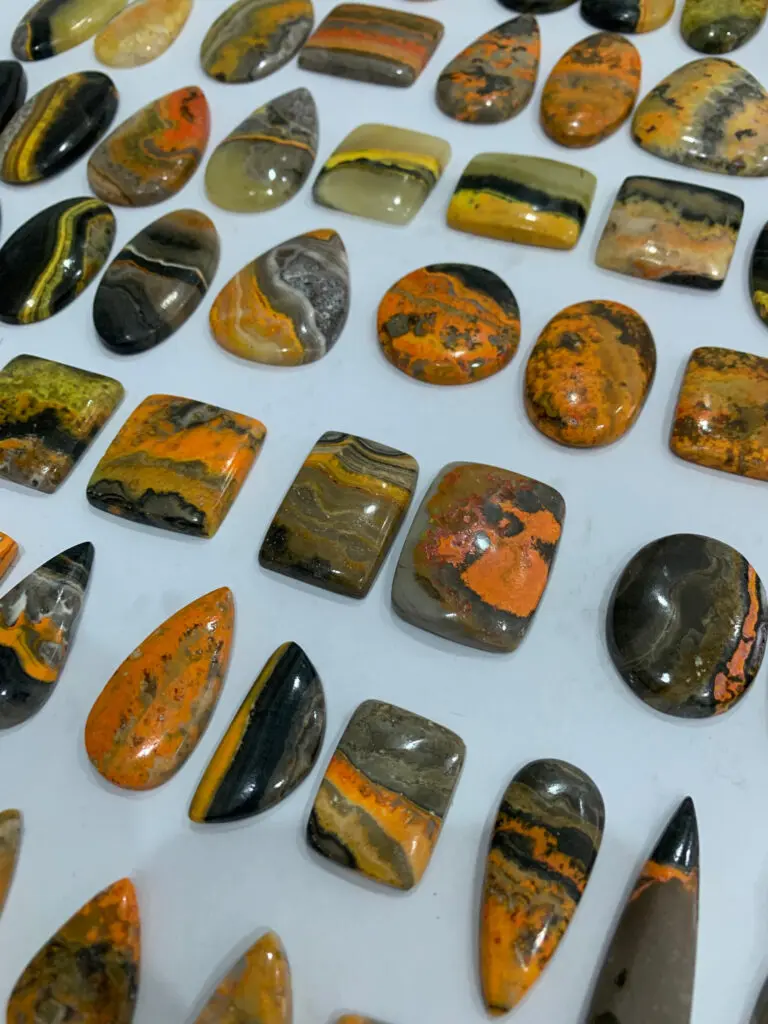
A freeform cabochon is a gemstone cut to a shape that suits the individual piece of rough rather than to predetermined standard dimensions.
Instead of forcing the gemstone into a particular size or outline, the cutter can work with its natural colour, pattern, inclusions and structure.
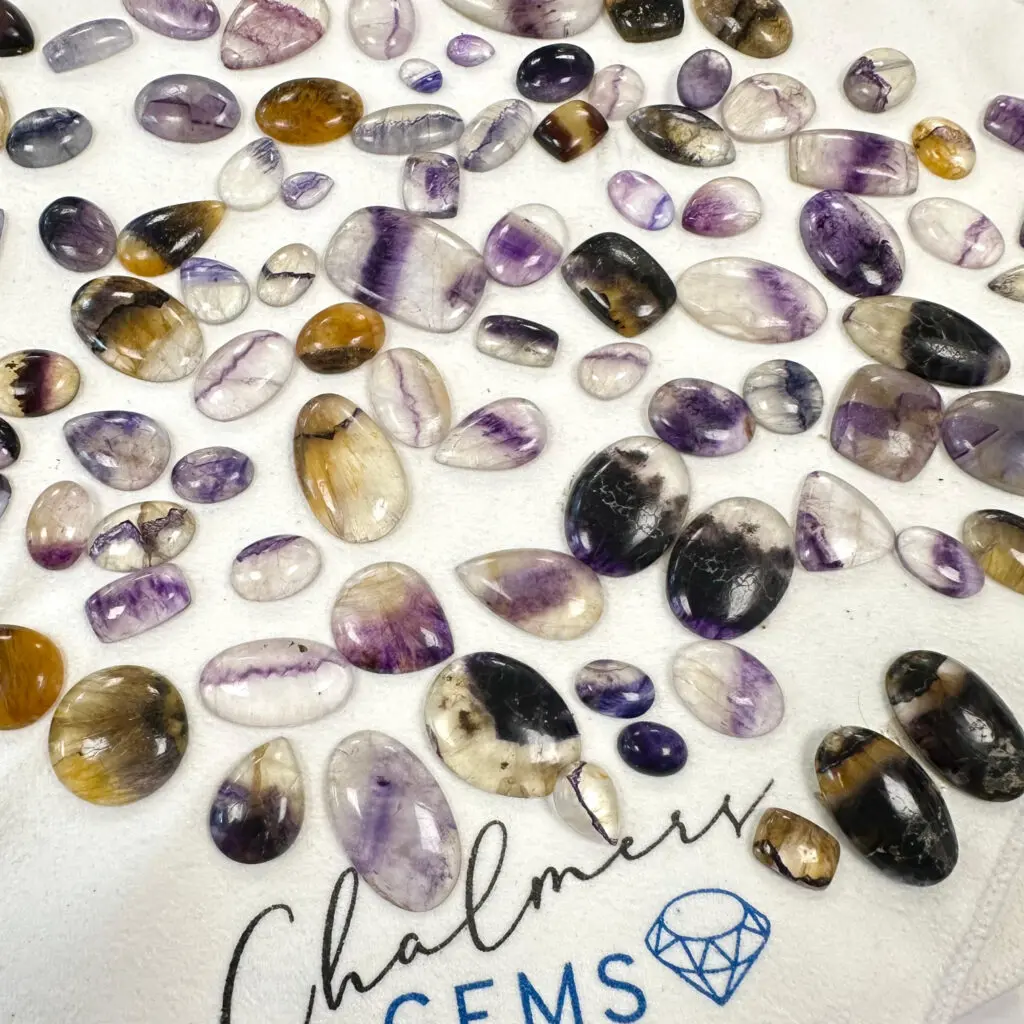
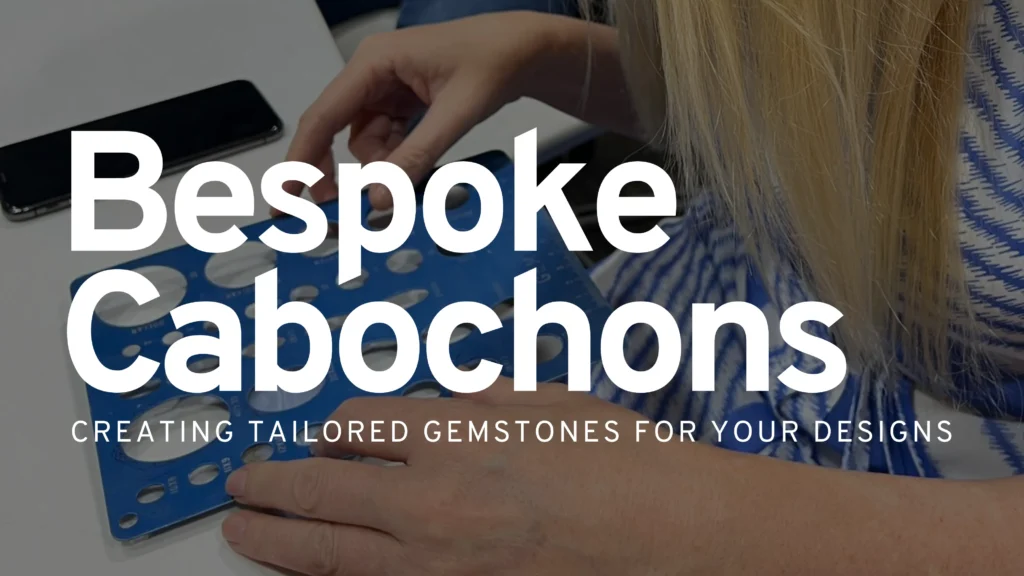
Here at Chalmers Gems we work with the worlds best cabochon manufacturers who only cut for beauty, not yield! You will see behind the scenes videos on our social media of the cutters selecting the rough material for it's beauty. They then use stencils to outline the very best patterns from within the material and cut from there.
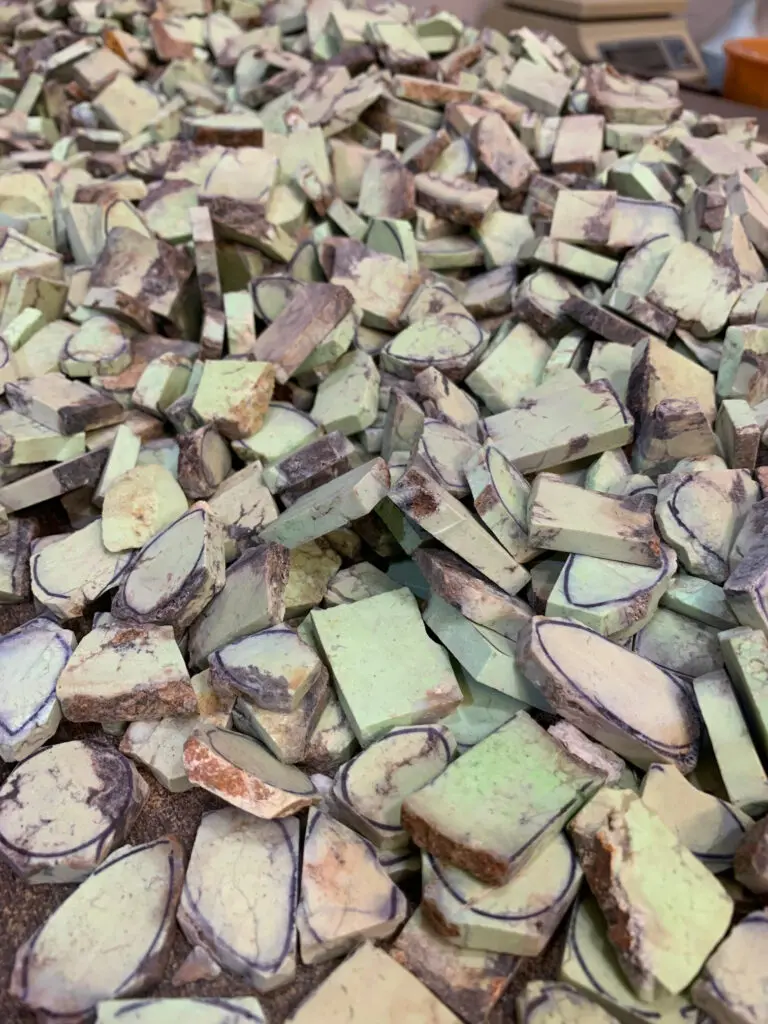
If the cutter is trying to get as many cabs as they can out of a gemstone, they will just line up the cabs like a cookie cutter on dough, and cut as many as possible without giving any consideration to the beauty of the cabochon! These are the cheap cabochons you find on the internet!
A freeform cabochon might be:
- An irregular oval
- An elongated pear
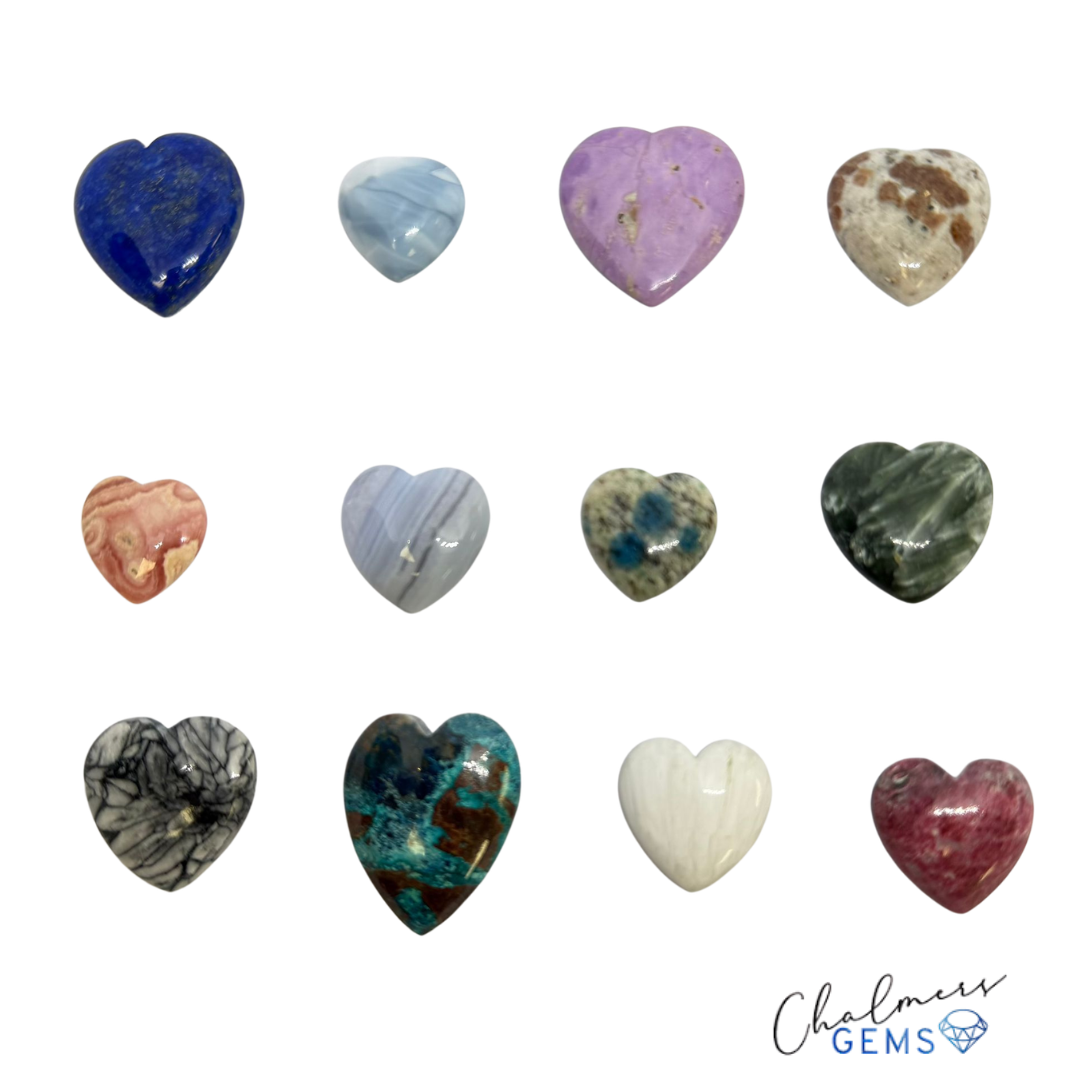
- A pebble shape
- An asymmetric marquise
- An abstract or completely organic shape
The important point is that the gemstone influences the finished shape.
This can allow a cutter to preserve a particularly beautiful area of colour or pattern that might otherwise have to be removed to produce a standard calibrated stone.
The result is that each freeform cabochon is individual.
What are calibrated cabochons?
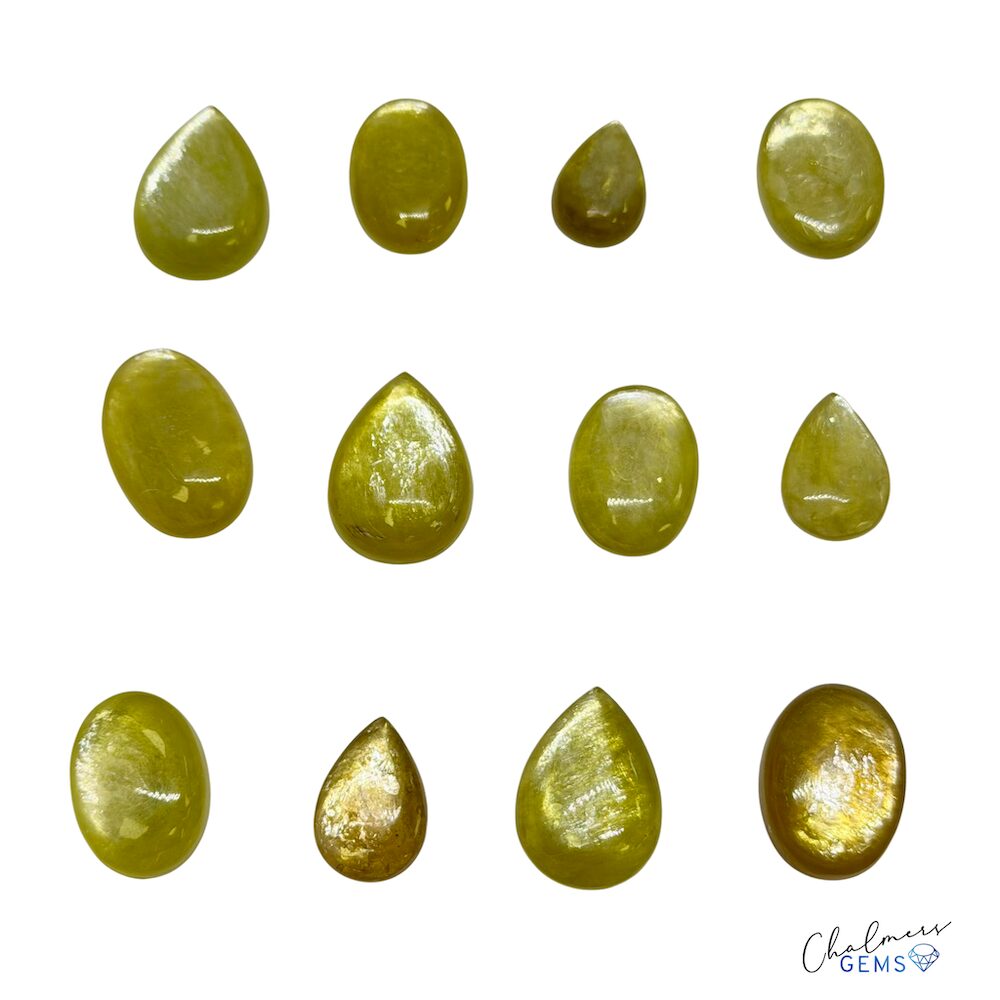
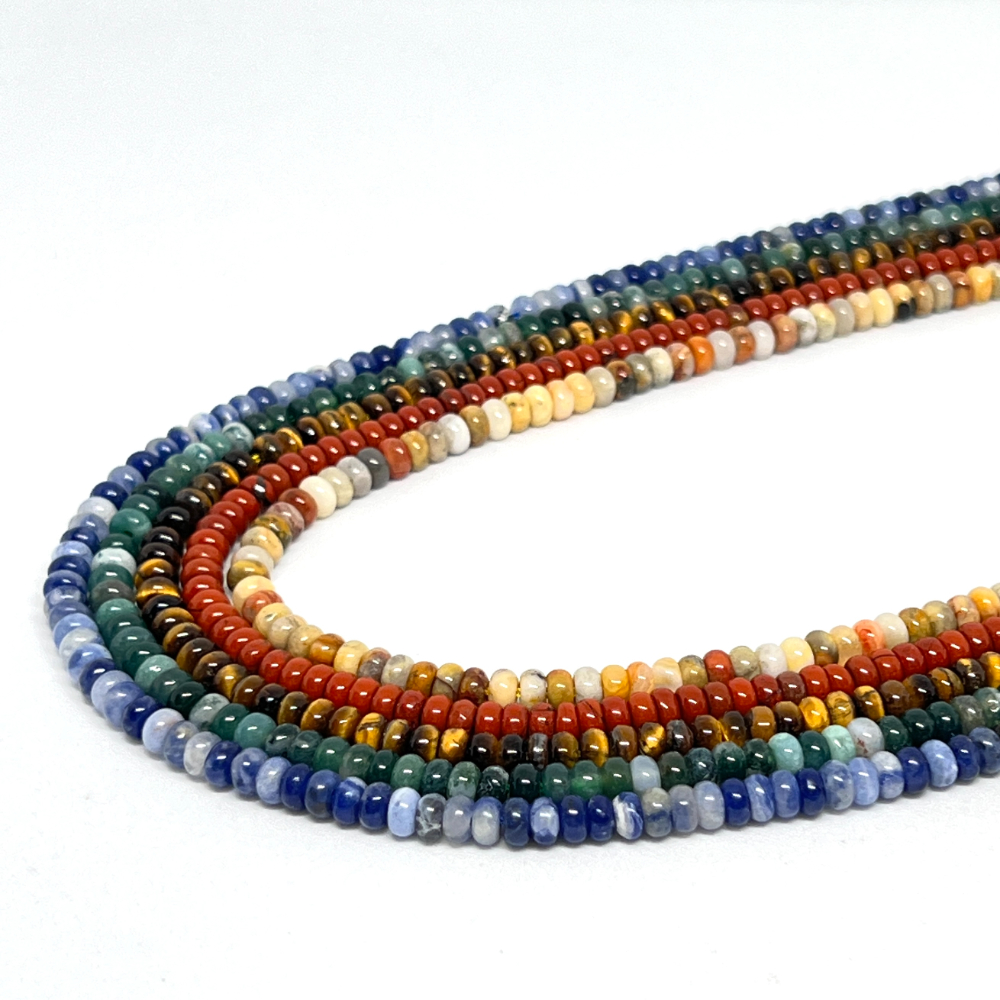
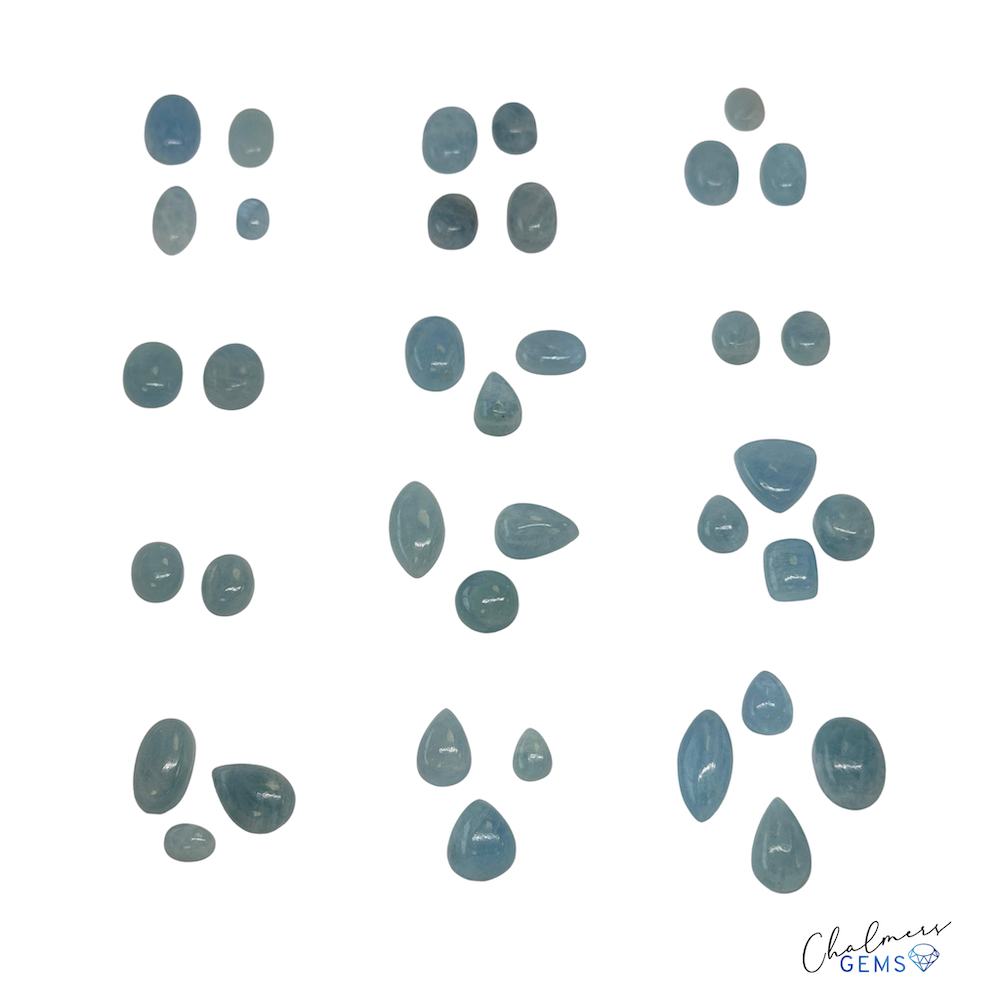
A calibrated cabochon is a gemstone cut to predetermined standard dimensions so that it can fit jewellery settings made for that size.
For example, you might buy an oval cabochon measuring 8 × 10 mm.
Other gemstones can then be cut to the same dimensions, allowing a jeweller to use the same setting or jewellery design repeatedly.
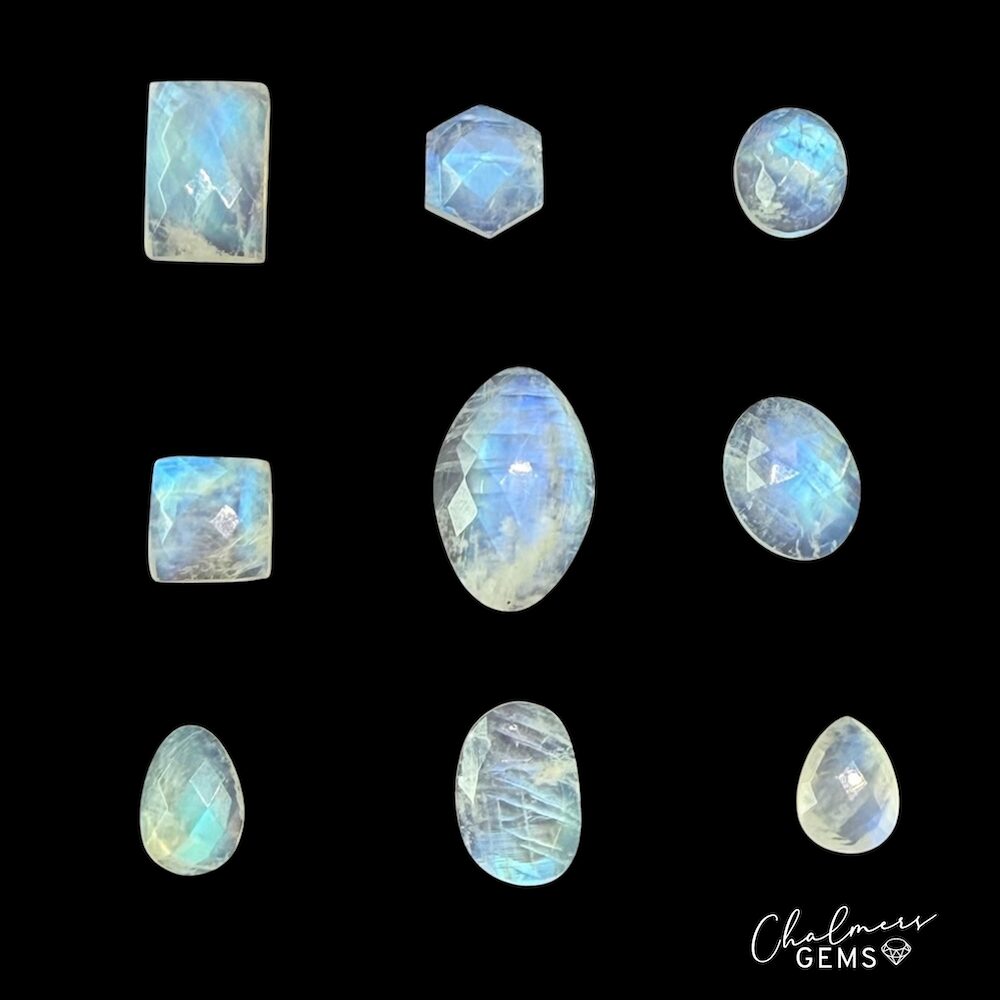
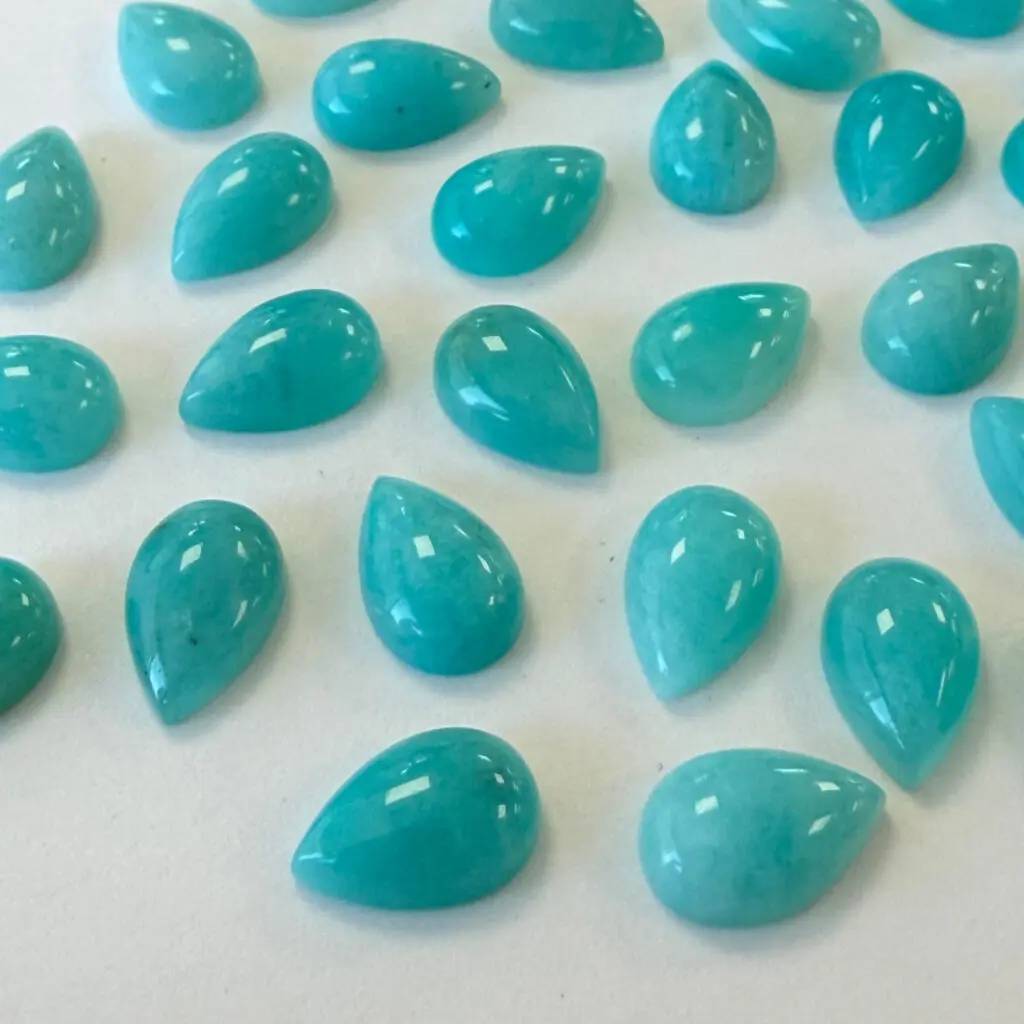
Calibrated cabochons are available in shapes including:
- Ovals
- Rounds
- Pears
- Squares
- Rectangles
- Cushions
- Marquises
The exact sizes available will vary according to the gemstone, supplier and market.
This is why I always recommend checking which calibrated sizes are readily available before designing a setting around a particular measurement.
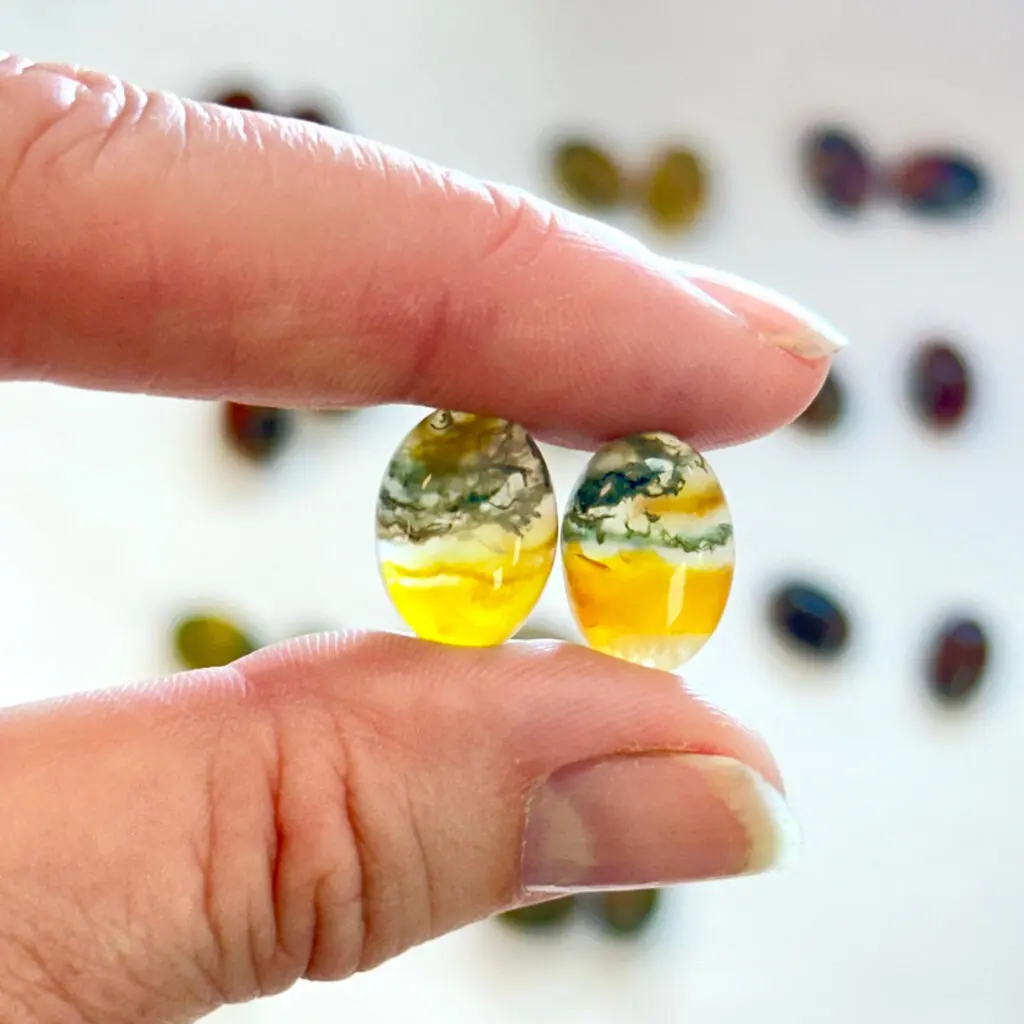
Perfect for earrings!
Freeform vs calibrated cabochons at a glance
| Freeform cabochons | Calibrated cabochons | |
|---|---|---|
| Shape | Individual or organic | Standardised |
| Dimensions | Vary from stone to stone | Cut to specified sizes |
| Best for | Bespoke and one-off jewellery | Repeatable designs and collections |
| Design process | Design around the stone | Stone fits the design |
| Pre-made settings | Usually unsuitable | Often ideal |
| Repeatability | Low | High |
| Individuality | Very high | Lower |
| Bench time | Usually greater | Potentially lower |
| Production runs | More difficult | Much easier |
| Matching pairs | Can be challenging | Easier |
| Custom setting required? | Usually | Not necessarily |
The easiest way to choose: are you designing around the stone or the setting?
This is probably the single most useful question to ask.
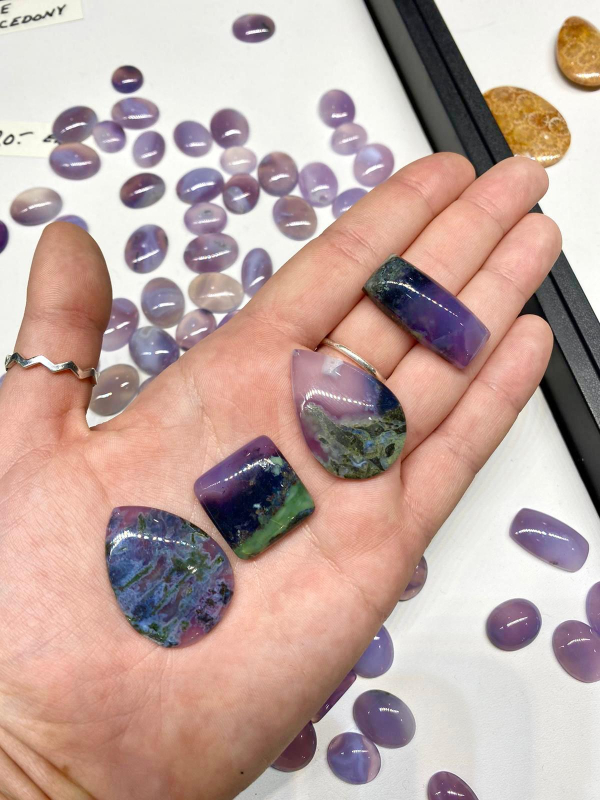
If you design around the gemstone, choose freeform
Perhaps you've found a spectacular piece of jasper with an unusual pattern, a piece of turquoise with beautiful matrix, or a gemstone with a particularly interesting inclusion.
You don't want the cutter to remove the most interesting part simply to make the stone conform to a standard size.
In this situation, let the gemstone dictate the design.
Choose the cabochon first and then create the jewellery around it.
This is where freeform cabochons really come into their own.
If you design the setting first, choose calibrated
Now imagine you're designing a ring using CAD.
You've created the setting, produced a master and perhaps had the design cast. The space for your gemstone is already fixed.
You now need a stone that fits that space.
That's where calibrated cabochons make much more sense.
If you're planning to produce the same design repeatedly, using a recognised calibrated gemstone size makes sourcing replacement stones considerably easier.
A useful rule to remember is:
Stone first = consider freeform.
Setting first = consider calibrated.
When should you choose a freeform cabochon?
Freeform cabochons are particularly suitable for bespoke, handmade and one-of-a-kind jewellery.
Consider freeform if:
- You want every finished piece to be unique
- You're making a one-off commission
- An unusual gemstone pattern is central to your design
- You enjoy designing around individual stones
- You make your own settings from scratch
- The individuality of the gemstone is part of what you're selling
For an independent jeweller or silversmith, this can be a real advantage.
Instead of producing ten identical necklaces, you might create ten pieces that clearly belong to the same collection but contain individually shaped gemstones.
That uniqueness can become part of the story and value of the jewellery.
What are the disadvantages of freeform cabochons?
The biggest disadvantage is repeatability.
If a customer loves a ring you've made using a unique freeform cabochon and asks you to make exactly the same ring again, finding another gemstone with precisely the same dimensions may be impossible.
Freeform cabochons can also require more bench time.
You'll normally need to:
- Measure each gemstone individually
- Design around its particular outline
- Create or adapt a setting specifically for it
- Check the fit throughout the making process
That's perfectly reasonable for a bespoke piece, but it becomes much less efficient if you're trying to manufacture 50 identical rings.
When should you choose calibrated cabochons?
Calibrated cabochons are particularly useful when consistency and repeatability matter.
They're a good choice if:
- You're creating a repeatable jewellery collection
- You're producing multiple pieces from the same design
- You're working with cast settings
- You're using commercially available pre-made settings
- You need closely matched stones for earrings
- You're trying to control production time and costs
- You need to replace a gemstone in an existing design
For a jewellery business, this can make a significant difference to efficiency.
Once you know that a particular design takes, for example, a particular calibrated oval cabochon, you can source stones to suit the design rather than redesigning the jewellery around every individual gemstone.
Are calibrated cabochons exactly the same size?
This is an important distinction.
Calibrated does not mean absolutely identical.
Gemstones are cut materials and small tolerances can occur. Different suppliers and cutters may also work to slightly different tolerances.
If you're working with a setting where the fit is particularly critical, always measure the actual gemstone rather than relying entirely on its stated dimensions.
This is particularly important with rigid or commercially manufactured settings where you have very little room for adjustment.
Are calibrated cabochons better for pre-made settings?
Generally, yes.
If you're buying a pre-made cabochon setting designed for a specific stone size, you'll normally need a calibrated cabochon corresponding to that size.
A freeform stone is unlikely to fit because even a small variation in its outline can prevent it sitting correctly in the setting.
However, don't assume that an 8 × 10 mm stone will automatically fit every setting described as 8 × 10 mm. Check the dimensions and tolerances of both the stone and setting.
Are calibrated cabochons better for beginners?
Not necessarily, but they can make certain jewellery-making projects easier.
If you're learning to set gemstones using pre-made settings or working from established patterns, calibrated cabochons remove one variable from the process.
You know roughly what size and shape you're working with.
On the other hand, learning to create a bezel around a freeform cabochon is a valuable skill and gives you much greater freedom as a jeweller.
So I'd choose according to what you're trying to learn rather than assuming one is always better for beginners.
Freeform cabochons and gemstone yield
There is another reason cutters sometimes choose freeform shapes: gemstone yield.
Imagine a piece of rough containing a particularly beautiful pattern or area of colour.
Cutting a standard oval might mean grinding away a substantial amount of good gemstone material – possibly including the most interesting part.
A freeform shape gives the cutter greater freedom to work with what nature has provided.
This can be particularly effective with gemstones where every piece has an individual pattern, matrix or colour distribution.
It is one of the reasons I love freeform cabochons: the cut can celebrate the gemstone rather than forcing the gemstone to conform to the cut.
A costly mistake: designing for a non-standard cabochon size
This is something I would particularly encourage jewellery designers to think about.
Suppose you create a beautiful new ring design with a setting measuring 9 × 13 mm.
You have the CAD work completed, perhaps make a master and then discover that the gemstone you want is normally available in 8 × 10 mm or 10 × 14 mm – but not 9 × 13 mm.
You now have two choices.
Change the jewellery design or commission gemstones to be specially cut.
Custom-cut calibrated gemstones are usually going to be considerably more expensive than buying readily available standard sizes.
If you're planning a repeatable jewellery collection, therefore, don't treat gemstone sourcing as something that happens after the design stage.
Check which gemstone sizes are readily available before finalising your setting dimensions.
That small piece of planning can potentially save a great deal of money and frustration later.
Which is more expensive: freeform or calibrated cabochons?
There isn't a simple rule that says one type is always more expensive.
The value of a cabochon depends on factors including:
- Gemstone variety
- Quality
- Colour
- Pattern
- Rarity
- Size
- Cutting quality
- Origin, where relevant
- Treatments
- Market demand
However, there are hidden costs to consider as a jewellery maker.
A freeform stone may require additional design and bench time because you're creating a unique setting.
A calibrated stone may make production considerably quicker because you can reuse an existing setting or design.
So don't consider gemstone price alone.
Consider the total cost of turning that gemstone into a finished piece of jewellery.
Which is better for a jewellery business?
It depends on your business model.
If your brand is built around unique handmade jewellery, freeform cabochons can reinforce that individuality. Each gemstone becomes part of the story of the finished piece.
If you're developing a repeatable commercial collection, calibrated cabochons usually make more sense because they allow you to standardise designs and make production more predictable.
Many jewellery businesses use both.
You might have a core collection using calibrated gemstones alongside a higher-priced one-of-a-kind collection featuring unusual freeform cabochons.
The two don't need to compete with each other.
Quick decision guide: freeform or calibrated?
Ask yourself these questions before buying your cabochon:
Choose FREEFORM if…
- I'm designing around the gemstone
- I'm making a one-off or bespoke piece
- The individual pattern or shape of the gemstone matters
- I can make a custom setting
- I don't need to reproduce the exact design
- Uniqueness is part of the value of my jewellery
Choose CALIBRATED if…
- I've designed the setting first
- I'm producing a repeatable collection
- I'm using cast or pre-made settings
- Consistent sizing matters
- I need matching stones
- Production efficiency is important
- I want to source replacement stones more easily
Frequently asked questions about freeform and calibrated cabochons
What does calibrated mean in gemstones?
A calibrated gemstone has been cut to predetermined dimensions intended to correspond with recognised jewellery-setting sizes. This makes it easier to use the gemstone in repeatable, cast or commercially produced settings.
What is a freeform gemstone?
A freeform gemstone is cut without having to conform to a standard shape and set of dimensions. The cutter can instead choose a shape that makes the best use of the gemstone's natural colour, pattern and characteristics.
Can you put a freeform cabochon in a standard setting?
Usually not. Because freeform cabochons don't conform to standard dimensions and outlines, a setting normally needs to be made or adapted specifically for the individual stone.
Can calibrated cabochons vary slightly in size?
Yes. Calibration doesn't necessarily mean every gemstone will be identical to a fraction of a millimetre. Small cutting tolerances can occur, so measure your actual gemstone when fit is critical.
Should I buy my cabochon before making the setting?
For a bespoke or freeform piece, I would generally recommend having the actual gemstone available before completing the setting.
For a repeatable design using calibrated gemstones, establish which standard sizes are readily available before finalising the dimensions of your setting.
Which cabochon is best for jewellery making?
Neither freeform nor calibrated cabochons are universally better. Freeform cabochons are particularly suited to individual, stone-led designs, while calibrated cabochons are better suited to repeatable designs and predetermined settings.
Final thoughts
The choice between freeform and calibrated cabochons really comes down to one question:
Do you want the jewellery to fit the gemstone, or the gemstone to fit the jewellery?
If I'm creating something around an exceptional individual stone, I'll happily work with a freeform cabochon and let the gemstone lead the design.
If I'm developing a collection that needs to be made repeatedly and economically, I want to know that I can source stones in consistent sizes – and that's where calibrated cabochons become invaluable.
Neither approach is right or wrong.
The important thing is to make the decision before you've invested time and money into a setting that requires a gemstone you then struggle to source.
Marie Chalmers FGA DGA
Gemmologist & Founder, Chalmers Gems