Are gemstones better from China or India?
It's a question I'm asked regularly as a gemmologist and gemstone buyer. I go buying in both countries at least once a year, and I am not talking trade shows....I mean going into the market places and visiting manufactures and buying gemstones from the businesses who supply the trade shows.
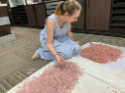
The short answer is no – neither China nor India automatically produces better-quality gemstone material. You can buy excellent, mediocre and poor-quality gemstones from both countries.
Where there can be a significant difference is in how the gemstones are cut.
China has developed exceptional expertise in precision machine cutting, producing extremely consistent beads and gemstone shapes.
India, meanwhile, has a remarkable tradition of hand cutting gemstones, making it particularly interesting for individual, artisanal and less uniform stones.
I've travelled to both countries to see these processes first-hand. So let's look at what those differences actually mean when you're buying gemstones for jewellery.
Are Chinese gemstones better quality than Indian gemstones?
Not necessarily.
One of the biggest misconceptions about buying gemstones is that the country where they're cut determines their quality.
It doesn't.
I've seen both high-quality and low-quality gemstone material in China and India – and everything in between.
Gemstone quality depends on the individual material you're buying and factors such as:
- Colour
- Clarity or inclusions
- Transparency
- Pattern, where relevant
- Cutting quality
- Treatments
- Rarity
- Overall desirability
Price and quality are also generally connected, although a high price alone is certainly no guarantee that you're buying a high-quality gemstone.
So I wouldn't ask:
“Are Chinese gemstones better than Indian gemstones?”
I'd ask:
“Which cutting style and quality of gemstone are right for the jewellery I want to make?”
That's a much more useful question.
What is the main difference between gemstones cut in China and India?
From my experience sourcing gemstones and visiting cutters, one of the most noticeable differences is the cutting process.
China excels at precision machine cutting and consistency.
India excels at traditional hand cutting and individuality.
That's a generalisation – both countries have diverse gemstone industries – but it's a useful way of understanding the differences you'll often encounter as a jewellery maker.
And neither approach is inherently better.
They produce stones suited to different types of jewellery.
Chinese gemstone cutting: precision and consistency
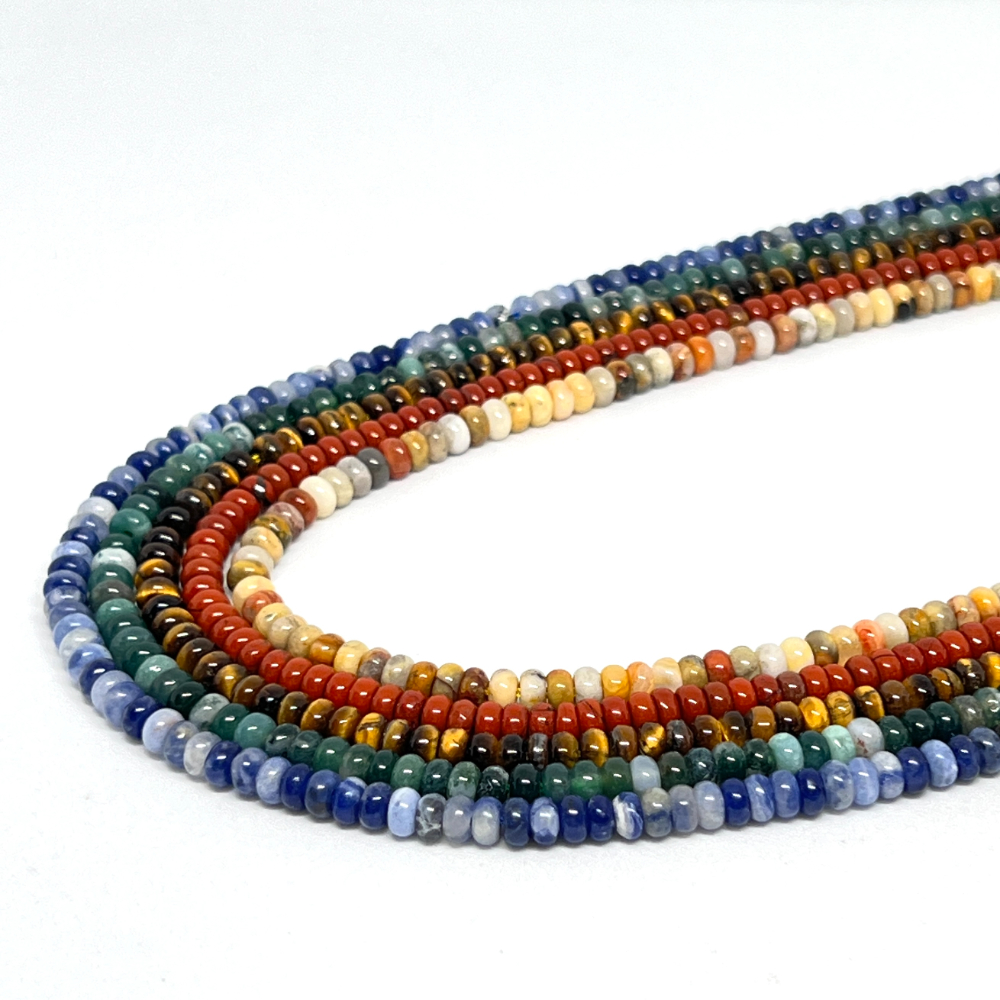
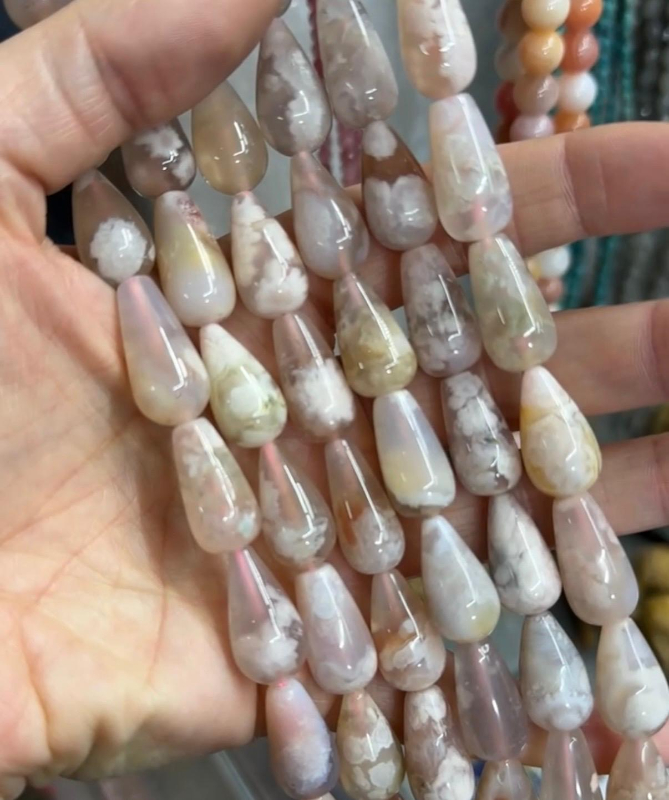
China is particularly well known for machine-cut gemstone beads.
I've visited gemstone factories in China and watched the process first-hand.
A bead can pass through machinery repeatedly, with each stage refining its dimensions and finish until the manufacturer achieves an extremely consistent result.
The precision can be extraordinary.
If you examine a good strand of Chinese machine-cut round beads, you'll often see:
- Very consistent diameters
- Smooth surfaces
- Uniform profiles
- Consistent drill holes
- Regular spacing when strung
- Excellent symmetry
Put the beads next to one another and they can look almost identical.
For certain jewellery designs, that's exactly what you need.
Why does consistency matter when making jewellery?
Imagine you're producing a necklace using 6 mm round gemstone beads.
If you're trying to achieve a clean, contemporary and symmetrical design, you don't want one bead measuring noticeably larger than the next.
You want the eye to travel smoothly around the necklace.
Machine cutting makes that level of consistency much easier to achieve.
It's particularly useful for jewellery makers creating:
- Repeatable collections
- Symmetrical necklaces
- Bracelets
- Matching earrings
- Production jewellery
- Jewellery requiring calibrated components
- Designs using very small gemstones
If you're producing the same design repeatedly, consistency can also save considerable time at the bench.
China can produce far more than round gemstone beads
People often associate Chinese cutting with perfect round beads, but that's only part of the story.
One of the things that impresses me about modern Chinese gemstone manufacturing is the variety of shapes that can be produced with considerable consistency.
That includes intricate and very small fancy shapes.
For a jewellery designer, this opens up interesting possibilities.
You can potentially source an unusual gemstone component and still have sufficient consistency to incorporate it into a repeatable collection.
That combination – unusual shape plus manufacturing consistency – can be extremely useful commercially.
Indian gemstone cutting: the beauty of hand-cut stones
India offers something quite different.
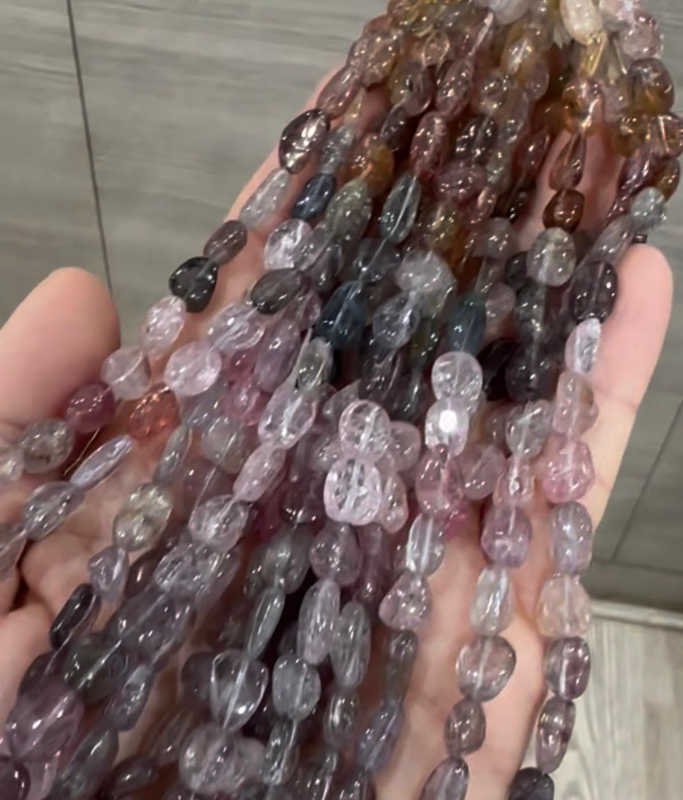
India has an extraordinary gemstone-cutting heritage and remains home to highly skilled craftspeople who cut gemstones by hand.
With hand-cut stones, you can often see subtle differences between individual pieces.
Take a strand of smooth gemstone rondelles, for example.
One might be slightly thinner.
Another might be slightly thicker.
The profile may change subtly as you move along the strand.
Those differences aren't necessarily defects.
They're evidence of the way the gemstones have been individually worked.
When should you choose Indian hand-cut gemstones?
Hand-cut gemstones can work beautifully in artisanal and individual jewellery.
I'd particularly consider them if:
- You make one-of-a-kind pieces
- You want an organic appearance
- You don't need every gemstone to be identical
- The character of the stone is important to your design
- You're making bespoke jewellery
- You value visible evidence of hand craftsmanship
If your jewellery is deliberately individual, slight differences between stones can actually contribute to the finished design.
Instead of asking whether every stone is absolutely identical, you're looking at whether they work beautifully together.
Machine cut vs hand cut gemstones: which is better?
Neither.
This is where I think jewellery makers sometimes ask the wrong question.
Machine cutting is better when precision and repeatability are important.
Hand cutting can be better when individuality and an artisanal character are important.
Think about the finished jewellery.
If you're making 100 identical bracelets for a collection, very consistent machine-cut beads could make production considerably easier.
If you're creating a one-off necklace where the individuality of each gemstone contributes to the design, hand-cut material might be exactly what you're looking for.
The cutting method should suit the jewellery.
China vs India gemstone cutting at a glance
| China | India | |
|---|---|---|
| Particularly known for | Precision machine cutting | Skilled hand cutting |
| Consistency | Can be extremely high | Individual variation is common |
| Round beads | Excellent consistency | More variation possible |
| Fancy shapes | Wide range possible | Excellent individual shapes |
| Tiny components | Machine cutting can achieve impressive precision | Depends on cutter and material |
| Best suited to | Repeatable, consistent designs | Artisanal and individual designs |
| Individuality | Lower where precision is the goal | Often higher |
| Gemstone quality | Available from low to high | Available from low to high |
The important point is that cutting style should not be confused with gemstone quality.
Why gemstone cut matters so much
The quality of the cut is one of the most important considerations when I buy gemstones.
A good cut can reveal the beauty of the material.
A poor cut can undermine it.
That applies whether the stone has been cut by hand or machine.
Depending on the gemstone, I'm looking at things such as:
- Symmetry
- Proportions
- Polish
- Surface condition
- Shape
- Consistency
- Drill holes in beads
- Orientation of colour or pattern
- How well an optical effect has been displayed
With cabochons, I may also consider dome height, thickness and how easily the stone can be set.
The key is that expensive gemstone material does not compensate for poor cutting.
You can start with beautiful rough and still end up with a disappointing finished stone if it hasn't been cut sympathetically.
Does hand cut mean higher quality?
No.
Hand cutting describes the method used to shape the gemstone; it isn't automatically a quality grade.
A beautifully hand-cut gemstone can demonstrate extraordinary skill.
A poorly hand-cut gemstone can simply be badly cut.
The same applies to machine cutting.
Machine cutting can produce outstanding precision, but the fact that machinery was used doesn't tell you whether the underlying gemstone material is high quality.
Cutting method and gemstone quality need to be assessed separately.
Does machine cut mean a gemstone isn't natural?
No.
This is another useful distinction.
“Machine cut” describes how the gemstone was shaped. It doesn't tell you whether the gemstone itself is natural, synthetic or treated.
A natural gemstone can be cut by machine.
It can also be cut by hand.
When buying gemstones, therefore, think about identity, treatments, material quality and cutting quality as separate questions.
Are gemstones cheaper in India than China?
It's tempting to make a simple country-by-country price comparison, but gemstone pricing doesn't work like that.
The price you pay can depend on:
- The gemstone
- Quality
- Size
- Cutting
- Quantity purchased
- Treatments
- Availability
- Labour and manufacturing requirements
- Supply and demand
- Your relationship with the supplier
You can find inexpensive and expensive gemstones in both countries.
I wouldn't choose a sourcing country purely because you believe it will automatically be cheaper.
I'd concentrate on whether you're getting the right material, at the right quality, cut appropriately for your jewellery, at a price that makes commercial sense.
Should jewellery makers buy gemstones directly from China or India?
Buying directly from overseas suppliers can offer access to an enormous range of gemstones, but it also requires knowledge.
When I'm sourcing, I'm not simply looking at a photograph and choosing something because it looks attractive.
I'm considering what the material actually is, how it has been cut, whether treatments have been disclosed, whether the quality matches the price and whether it's suitable for the customer who will ultimately use it.
For many jewellery makers, developing a relationship with a trusted gemstone supplier can therefore be more valuable than continually buying from unknown sellers simply because a strand appears inexpensive online.
Your supplier should understand what you make and be able to help you source stones appropriate for it.
My advice when choosing a gemstone supplier
Don't just buy gemstones “willy-nilly” from different places on the internet.
Build a relationship with your supplier.
Over time, a good supplier can learn:
- The gemstones you use
- The quality you expect
- The sizes you need
- Your preferred cutting style
- Your budget
- Whether consistency or individuality matters to your work
That relationship becomes particularly valuable when you're buying natural materials because gemstones aren't manufactured commodities where every batch is identical.
Good sourcing is about much more than finding the lowest price.
Frequently asked questions about gemstones from China and India
Are gemstones from China good quality?
Yes, high-quality gemstones can be sourced and cut in China. Lower-quality material is also available. The country itself isn't a gemstone quality grade. China is particularly notable for highly consistent machine cutting.
Are gemstones from India good quality?
Yes. India has a major gemstone cutting and trading industry and produces everything from commercial material to exceptional gemstones. As with China, quality varies enormously.
Is Chinese or Indian gemstone cutting better?
Neither is universally better. Chinese machine cutting can be excellent when precision and consistency are required, while Indian hand cutting can be particularly suitable for artisanal, individual jewellery.
Why are Chinese gemstone beads so uniform?
Machine-cutting processes allow manufacturers to repeatedly refine gemstones to tightly controlled dimensions, which can create very consistent beads and components.
Why aren't hand-cut gemstone beads exactly the same size?
Because individual stones are worked by craftspeople, small differences in thickness, dimensions and profile can remain. Depending on the jewellery design, these variations may be desirable rather than defects.
Are hand-cut gemstones more valuable than machine-cut gemstones?
Not automatically. The value of a gemstone depends on the material, rarity, quality, cutting and market demand. The cutting method alone doesn't determine its value.
Where should I buy gemstones for jewellery making?
Choose a supplier who can accurately describe their gemstones, discuss treatments and quality, and provide the sizes and cutting style appropriate for your jewellery. Building a relationship with a knowledgeable supplier is often more valuable than simply choosing whichever online seller has the lowest price.
So, which should you choose: China or India?
If you're deciding between Chinese and Indian-cut gemstones, don't start with the country. Start with your jewellery.
Ask yourself:
Do I need absolute consistency or do I want individuality?
Am I producing a repeatable collection or one-off pieces?
Do I need tiny, precisely cut components?
Do I want an artisanal, hand-cut appearance?
What quality of gemstone does my price point require?
Once you know the answers, you can choose material that's right for your design.
I've travelled to gemstone factories and cutting workshops in both China and India, and one of the things I want to show through Chalmers Gems is what actually happens to gemstones before they arrive on a jeweller's bench.
There are extraordinary skills in both countries.
The question isn't “Which country makes better gemstones?”
It's:
“Which gemstone is right for what I'm trying to make?”
Marie Chalmers FGA DGA
Gemmologist & Founder, Chalmers Gems