
Amethyst
Everything you need to know about amethyst gemstones by expert gemmologist, Marie Chalmers.
Amethyst is one of the world's most recognisable gemstones, prized for its rich purple colour and versatility.
Popular with jewellery makers, collectors and designers alike, it is available in a wide range of shades, shapes and sizes.
What is Amethyst?
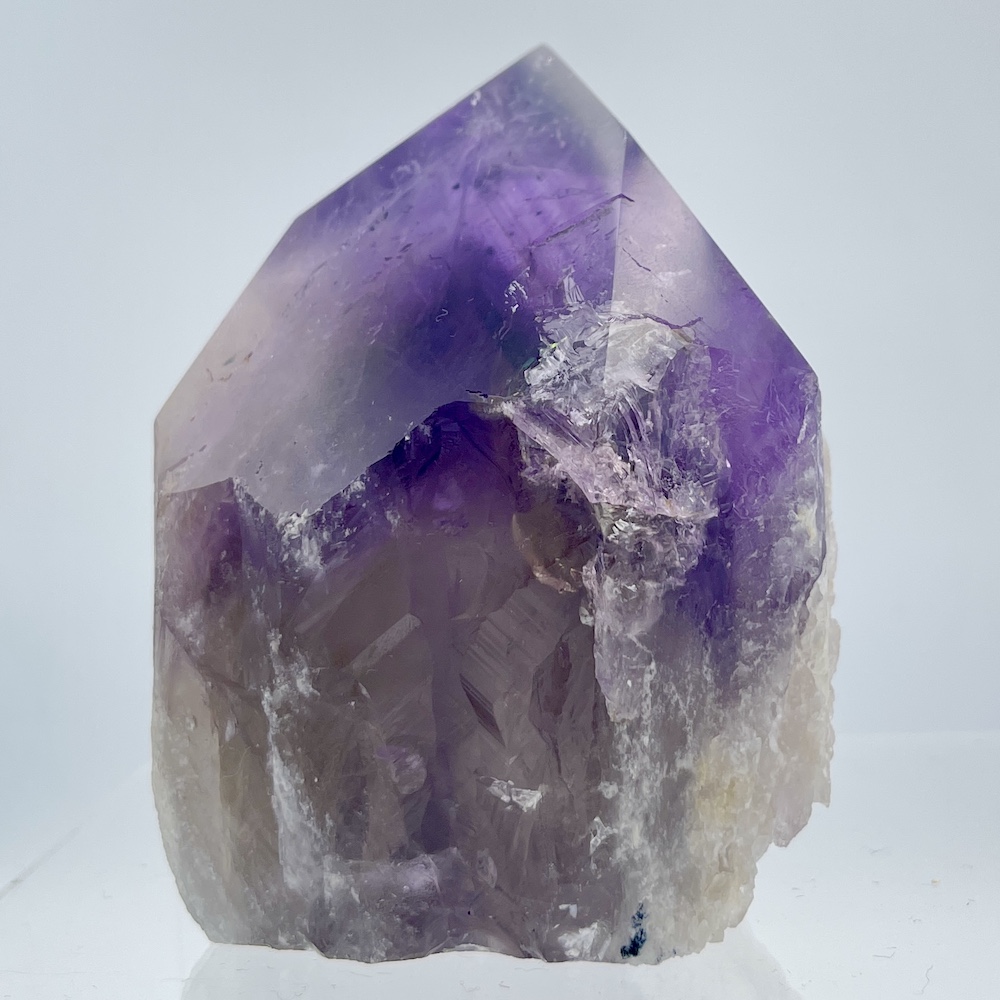
Amethyst is a purple variety of Quartz which is the largest Gemstone family. Its sisters are Rose Quartz, Citrine, Prasiolite and Smokey Quartz, just to name a few. Amethyst’s colour comes from iron and grows in a high temperature and a high-pressure environment. Amethyst varies in shade from very pale lavender to intense purple. The colour is dictated by the level of iron within each Stone.
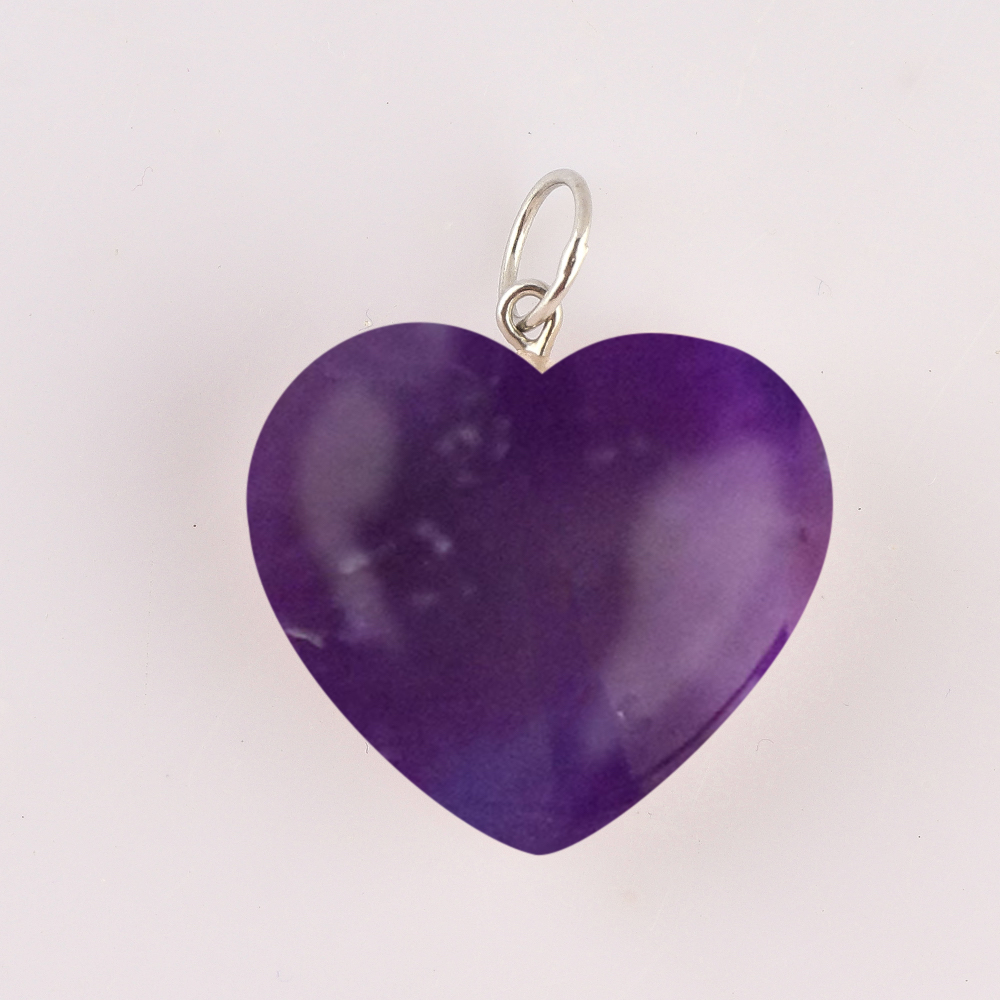
Amethyst can occur in a range of shapes and colours and can be found with large natural points or polished into smooth shapes.
Until the beginning of the 20th Century Amethyst was quite rare and costly. It was as expensive as Ruby and Emeralds. You may spot Amethyst in antique Jewellery or Royal Jewels, including the British Royal Family Crown Jewels, which you can view at the Tower of London. Today it is one of the most popular Quartz varieties and is in high demand for designer pieces. Its purple hues make it so popular within the mass market.
If you are born in February, Amethyst is your Birthstone.
Amethyst is a 7 on the Mohs Scale of Hardness. This means it is appropriate for Jewellery. To keep your Gems clean we recommend using the Chalmers Gems Gemstone Cleaning & Polishing Cloth.
Why Jewellery Makers Love Amethyst
Amethyst works beautifully in a wide range of jewellery designs. Its distinctive colour pairs well with silver, gold and copper, making it a favourite for wire wrapping, statement pendants and handmade jewellery collections.
Popular uses include:
- Cabochon jewellery
- Wire wrapped pendants
- Beaded bracelets
- Earrings
- Statement necklaces
Popular Amethyst Products
-

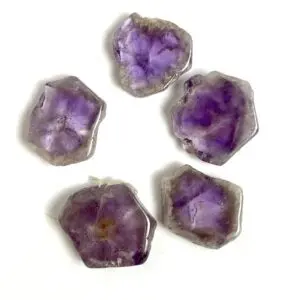
Amethyst Hexagon Slices Approx 15mm 5 Piece Pack
£13.00 -
Amethyst Hexagon Slices Approx 15mm Drill Hole 0.6mm 5 Piece Pack
£13.00 -
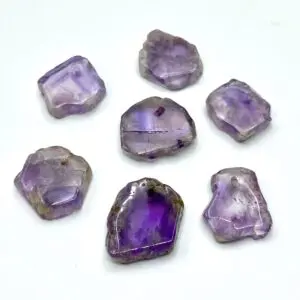
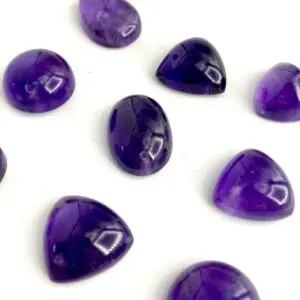
Amethyst Mixed Shape Top Drilled Cabochons Approx 15 – 20mm 3 Piece Pack
£17.50 -
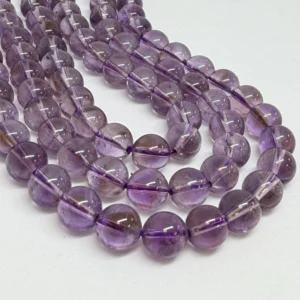
Amethyst Beads 4mm – Smooth Round Gemstone (38cm) Strand
£7.50 -
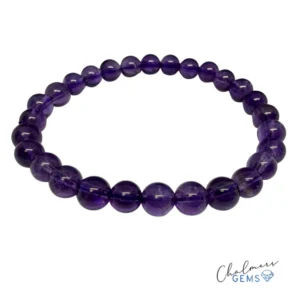
Amethyst 6mm Smooth Round Stretchy Bracelet Approx 34 Beads
£26.50 -
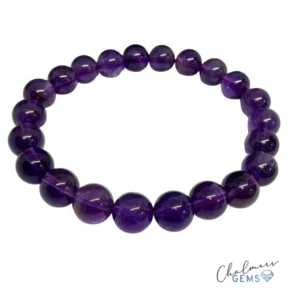
Amethyst 8mm Smooth Round Stretchy Bracelet Approx 22 Beads
£42.00
Where does amethyst come from?
Amethyst is found in many parts of the world, including Brazil, Uruguay, Zambia and Madagascar. Each location can produce stones with slightly different colours and characteristics.
Is amethyst a natural gemstone?
Yes. Most amethyst used in jewellery is completely natural. Some stones are heat-treated to enhance or alter their colour, but natural amethyst is widely available.
Is amethyst a birthstone?
Yes. Amethyst is the traditional birthstone for February and is also associated with the sixth wedding anniversary.
Why is amethyst purple?
The purple colour comes from trace amounts of iron within the quartz crystal combined with natural radiation over millions of years.
Is every amethyst the same colour?
No. Amethyst ranges from pale lavender to deep royal purple, and some stones display colour zoning where different shades appear within the same crystal.
Can amethyst be used for jewellery making?
Absolutely. Amethyst is a durable gemstone that's ideal for pendants, earrings, bracelets and many other jewellery-making projects. It's available in a wide range of shapes, sizes and cuts.
How do I care for amethyst?
Clean amethyst using warm water, mild soap and a soft cloth or brush. Avoid prolonged exposure to strong sunlight, as some stones can fade over time. To keep your Gems clean we recommend using the Chalmers Gems Gemstone Cleaning & Polishing Cloth.
Can amethyst go in water?
Yes. Amethyst can safely be cleaned with water and mild soap. However, it's best not to leave it soaking for long periods or expose it to harsh chemicals. After cleaning, dry your amethyst with a soft cloth to help keep it looking its best.
How can I tell if amethyst is real?
A qualified gemmologist can identify genuine amethyst by examining its optical and physical characteristics. Natural amethyst often contains subtle inclusions and colour variations that distinguish it from glass or synthetic imitations.
Why buy amethyst from Chalmers Gems?
Every amethyst at Chalmers Gems is carefully selected by qualified Gemmologist Marie Chalmers. Each gemstone is chosen for its quality, authenticity and suitability for jewellery makers, giving you confidence in every purchase.